The Doctor Will Listen Now: When Medicine Ran on Instinct, Not Algorithms
The Art of Medical Detective Work
Dr. William Hartley kept his stethoscope polished and his ears sharp. In 1962, when a worried mother brought her feverish six-year-old to his small-town practice in Ohio, he didn't order a battery of tests or consult a computer screen. Instead, he sat down, listened to the child's breathing, felt for swollen lymph nodes, and asked the right questions. Within twenty minutes, he'd diagnosed pneumonia and prescribed the appropriate treatment. No lab work. No imaging. Just decades of experience and a practiced eye.
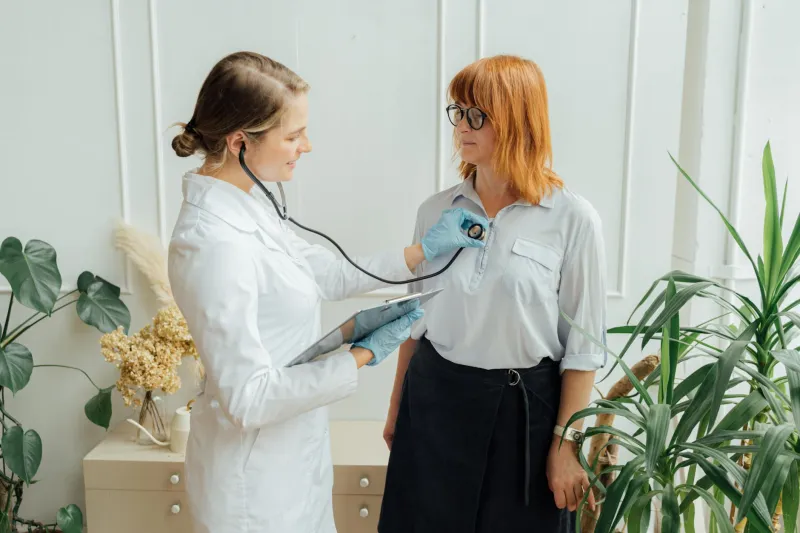
This wasn't unusual medicine in 1962 — it was standard practice across America. Doctors were trained to be medical detectives, using their five senses as primary diagnostic tools. They listened to heart murmurs through stethoscopes, felt for lumps and swelling with their hands, observed skin color and breathing patterns, and relied heavily on patient history and physical examination.
When Your Doctor Knew You (And Your Family)
The family physician of the mid-20th century operated more like a medical anthropologist than today's specialists. Dr. Hartley knew that Tommy's father worked in the steel mill and was prone to back injuries. He remembered that Tommy's grandmother had diabetes and his mother struggled with anxiety during the winter months. This generational knowledge informed his diagnoses in ways that modern electronic health records, for all their digital sophistication, simply cannot replicate.
Physicians made house calls not just out of convenience, but because seeing a patient in their home environment provided crucial diagnostic information. The cleanliness of the house, the family dynamics, the economic situation — all of these factors helped doctors understand not just what was wrong, but why it might be wrong.
The Limited but Intimate Toolkit
The diagnostic arsenal of the 1950s and 1960s was remarkably sparse by today's standards. A basic X-ray machine, a stethoscope, a blood pressure cuff, a few simple blood tests, and an ophthalmoscope for looking into eyes and ears. That was essentially it for most family practices. Electrocardiograms existed but were expensive and primarily used in hospitals. Blood work was limited to basic counts and a few chemical markers.
Yet doctors achieved remarkable diagnostic accuracy with these simple tools. They had to. There was no fallback of ordering an MRI "just to be sure" or running a comprehensive metabolic panel to cover all bases. Physicians developed an almost supernatural ability to read subtle physical signs — the slight yellowing of the eyes that suggested liver problems, the particular quality of a cough that indicated tuberculosis, the way a patient walked that revealed a heart condition.
The Revolution of Information Overload
Today's diagnostic process would seem like science fiction to Dr. Hartley. A routine checkup now might include blood work measuring dozens of different markers, digital imaging that can reveal abnormalities smaller than a grain of rice, and computer algorithms that cross-reference symptoms against vast databases of medical knowledge.
A modern emergency room physician can order a CT scan of a patient's entire torso and have results within minutes. Blood tests can detect genetic predispositions to diseases that won't manifest for decades. Heart monitors can stream real-time data to cardiologists hundreds of miles away.
This technological revolution has undoubtedly saved countless lives. Cancers are caught earlier, heart attacks are predicted before they happen, and rare genetic conditions are identified and treated in ways that would have been impossible fifty years ago.
What the Machines Can't Measure
But something intangible was lost in the transition from intuitive to algorithmic medicine. The old-school physician's ability to "read" a patient — to sense anxiety, depression, or family dysfunction that might be contributing to physical symptoms — has been largely replaced by checkbox questionnaires and referrals to specialists.
Dr. Hartley could tell when a patient was lying about their alcohol consumption or hiding domestic abuse. He could sense when a teenager's stomach problems were really about anxiety over college applications. Modern medicine, for all its technical sophistication, often misses these human subtleties.
The average patient visit in 1962 lasted 30-45 minutes. Today, it's closer to 15 minutes, with much of that time spent entering data into electronic health records rather than actually examining or talking with the patient.
The Paradox of Perfect Information
Modern diagnostic medicine suffers from what experts call "information overload." When every test can reveal dozens of potential abnormalities, doctors often find themselves chasing false positives and ordering additional tests to rule out conditions that clinical judgment would have dismissed decades ago.
The CT scan that reveals a small, benign cyst leads to follow-up MRIs. The blood test that shows a slightly elevated protein level triggers a cascade of additional testing. Patients become anxious about numbers and readings that previous generations never would have known existed.
The Human Cost of Technological Progress
Perhaps most significantly, the doctor-patient relationship fundamentally changed. The physician who once sat at your bedside, looked you in the eye, and explained your condition in plain English has been largely replaced by specialists who interpret test results and communicate through patient portals.
Patients in the 1960s might have been less informed about the technical details of their conditions, but they often felt more confident in their doctor's personal assessment. There was something reassuring about a physician who could diagnose your condition through observation and experience, rather than requiring a dozen tests to feel confident in their conclusion.
The Irreversible Path Forward
There's no going back to the era of purely intuitive medicine, nor should we want to. Too many lives have been saved by early detection and precise treatment that only modern diagnostic tools can provide. But recognizing what was lost in the transition helps us understand why many patients feel disconnected from their healthcare despite having access to the most advanced medical technology in human history.
The challenge for modern medicine isn't choosing between human intuition and technological precision — it's finding ways to combine both. The best physicians today still rely on their clinical judgment and patient observation skills, but they do so in partnership with remarkable diagnostic tools that would have seemed magical to Dr. Hartley.
The stethoscope still hangs around the doctor's neck, even in the age of echocardiograms. Some things, it turns out, are too valuable to leave entirely to the machines.