The Front Porch Interview: When Landing an Apartment Meant Charm, Not Credit Scores
The Sunday Afternoon Apartment Hunt
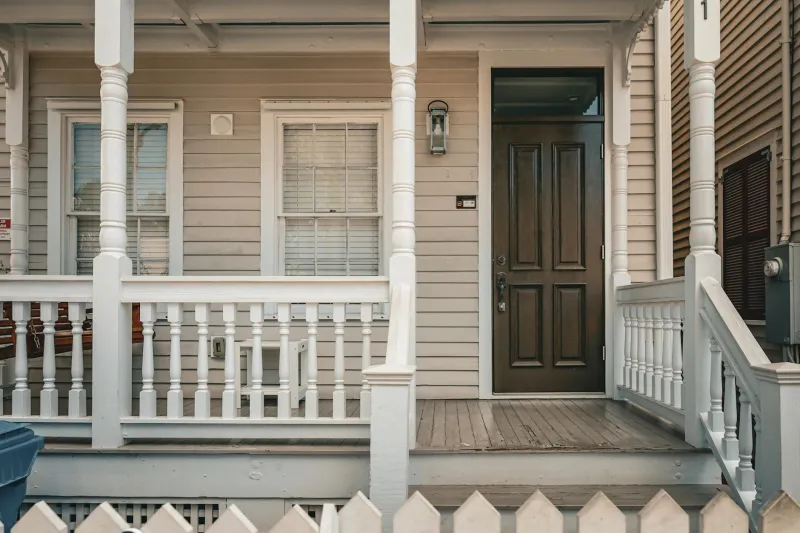
Picture this: It's 1965, and you're looking for a new apartment in Cleveland. You don't fire up a laptop or scroll through endless Zillow listings. Instead, you grab the Sunday paper, circle a few classified ads, and spend the afternoon driving around neighborhoods, looking for "For Rent" signs hanging in windows.
When you find a place you like, you knock on the door. The landlord—who probably lives right there in the building or next door—invites you in for coffee. You sit in their kitchen, maybe meet their kids, and have an actual conversation about who you are, where you work, and what you're looking for in a home.
That was it. No credit checks, no background investigations, no application fees, no bidding wars. If Mrs. Henderson liked the cut of your jib and you seemed like the type who wouldn't throw loud parties or skip out on rent, you shook hands and moved in next weekend.
When Your Pastor Was Your Credit Score
The rental process in mid-century America operated on an entirely different currency: reputation. Instead of FICO scores and debt-to-income ratios, landlords relied on character references and community connections. Your word was your bond, and your bond was backed by everyone who knew you.
A reference letter from your pastor, employer, or longtime neighbor carried more weight than any financial document. Landlords wanted to know: Are you the type of person who shows up to work on time? Do you keep your yard tidy? Are you respectful to your neighbors? These weren't questions you answered on a form—they were things people in your community could vouch for.
Many rental transactions happened through extended social networks. Your coworker's sister-in-law had a basement apartment available. Your barber knew a widow who was renting out her upstairs. The local diner owner heard you were looking for a place and mentioned that the apartment above the hardware store was coming available.
The Handshake Economy
Rent collection was equally informal. Many tenants paid in cash, often handing it directly to their landlord when they ran into them at the grocery store or after church on Sunday. Late payments were handled with personal conversations, not automated penalty fees. If you were going through a tough time, your landlord might work with you because they knew your situation and trusted you'd make it right.
Security deposits were modest—sometimes just the first month's rent, sometimes nothing at all if the landlord knew your family. Move-in inspections consisted of walking through the apartment together, with the landlord pointing out any existing issues and maybe handing you the spare key to the basement where you could store your bicycle.
Lease agreements, when they existed at all, were often single-page documents written in plain English. Many rental arrangements were entirely verbal, sealed with a handshake and the understanding that both parties would treat each other fairly.
The Personal Touch
Landlords in this era were typically individuals who owned a few properties in their neighborhood, not corporate entities managing thousands of units across multiple states. They had a personal stake in maintaining good relationships with tenants because their reputation in the community mattered.
Mrs. Johnson, who rented out the duplex on Maple Street, wasn't just your landlord—she was your neighbor. She might bring you soup when you were sick, help you jump-start your car in winter, or watch your apartment when you went out of town. In return, you might shovel her sidewalk, help her carry groceries, or fix a leaky faucet without calling it in as a maintenance request.
This personal relationship created a different dynamic around property maintenance and tenant responsibilities. Instead of formal work orders and professional repair services, many issues were handled through informal arrangements. Your landlord might knock $50 off the rent if you painted the kitchen yourself, or you might fix a squeaky door in exchange for permission to plant a garden in the backyard.
The Modern Rental Machine
Today's apartment hunting feels like applying for a security clearance. Before you can even schedule a viewing, you're required to submit a digital application with your social security number, employment history, bank statements, and references. Credit checks are standard, and many landlords won't even consider applicants with scores below 700.
Rental applications now come with fees—sometimes $50 to $100 just for the privilege of being considered. In competitive markets, prospective tenants submit "rental résumés" complete with professional headshots and cover letters explaining why they'd be the perfect tenant. Some even offer to pay months of rent upfront or above the asking price just to secure a lease.
Property management companies use algorithms to screen applications, automatically rejecting anyone who doesn't meet precise income requirements (typically 2.5 to 3 times the monthly rent). Background checks flag minor infractions from decades ago. The entire process has become so bureaucratized that many qualified tenants are eliminated before a human ever reviews their application.
The Price of Efficiency
Modern rental practices certainly offer advantages. Professional property management means faster maintenance responses, standardized lease terms, and legal protections for both landlords and tenants. Online platforms make it easier to find available units and compare prices across neighborhoods.
But the shift from relationship-based to algorithm-based rental decisions has fundamentally changed the housing market. What used to be a local, personal transaction has become a commoditized, data-driven process that often feels more like applying for a loan than finding a home.
The barriers to entry are higher now. Young people starting their careers, recent immigrants, or anyone with less-than-perfect credit faces obstacles that barely existed in the handshake era. The informal flexibility that once helped people through temporary financial difficulties has been replaced by rigid policies and automatic late fees.
The Human Element
Perhaps most significantly, the personal connection between landlords and tenants has largely disappeared. Today's renters often never meet the actual property owner, instead dealing with management companies, online portals, and automated systems. The sense of community and mutual responsibility that characterized earlier rental relationships has given way to purely transactional interactions.
The old system wasn't perfect—it could be exclusionary and relied on social networks that didn't always extend to newcomers or minorities. But it recognized something important: that choosing a tenant is ultimately about trust, and trust is built through human connection, not credit algorithms.
In our rush to make rental markets more efficient and scalable, we've lost something valuable about what it means to create a home and be part of a community. The handshake lease may be gone, but the human need for connection and belonging that it represented remains as important as ever.