The Butcher, the Banker, and the Soda Fountain: When Main Street Was Where America Actually Lived
The Street That Meant Something
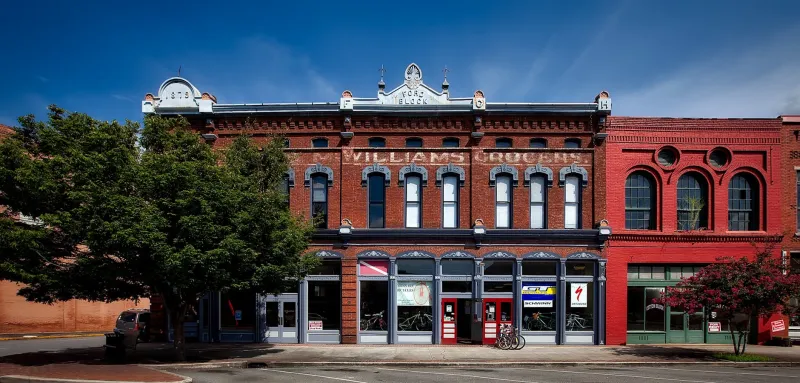
Walk down what used to be Main Street in almost any American town today, and you'll see the same thing: empty storefronts with paper-covered windows, a few chain restaurants, maybe a Walgreens. The buildings are still there, but they're husks. The life has drained out of them.
But fifty years ago, Main Street was the actual center of life. Not metaphorically. Literally.
In the 1960s, if you lived in a town of 10,000 people, Main Street was where you spent your day. You'd start at the diner for breakfast, where the owner knew your order and your kids' names. You'd pop into the hardware store to ask old Mr. Peterson how to fix your leaky faucet—he'd walk you through it without charging you a dime, because he knew you'd be back. You'd hit the butcher shop, where the butcher would trim your meat exactly the way you liked it and maybe slip you some bones for soup. You'd bank at the local bank, where the manager knew your family's financial situation better than you did. You'd grab a soda at the fountain. You'd see your dentist, your doctor, your lawyer—all on Main Street. All people you knew.
That wasn't shopping. That was community.
The Numbers Tell a Story of Disappearance
The statistics are staggering. In 1900, about 30 percent of Americans worked in retail. Most of those people worked in independent, locally-owned shops. Today, that number has collapsed to less than 10 percent—and most of those work for chains or big box stores.
When Walmart arrived in small-town America in the 1980s and 1990s, it didn't just offer lower prices. It offered convenience and selection that local stores couldn't match. Within a decade, the independent retailers on Main Street started closing. The hardware store couldn't compete with a Walmart that sold tools, paint, lumber, and groceries all under one roof at prices no local merchant could match.
But here's what the economists didn't measure: the social fabric that came apart when those stores closed.
A study by the Institute for Local Self-Reliance found that for every dollar spent at a locally-owned business, 48 cents stayed in the local community—paying local workers, paying rent to local landlords, buying supplies from local wholesalers. For every dollar spent at a chain store, only 14 cents stayed local. The rest flowed out to corporate headquarters in Bentonville or Atlanta or wherever.
When Main Street died, the wealth that had accumulated in small towns for generations began a slow exodus to distant cities.
The Loss Was More Than Economic
But the real cost wasn't just financial. It was social.
The local butcher shop wasn't just a place to buy meat. It was where you learned how to cook. Where you got advice about your family. Where you felt seen and known. The hardware store owner wasn't just selling you a hammer. He was solving problems. He was part of your life.
These relationships created social capital—the invisible glue that holds communities together. When you know the people around you, when you trust them, when you see them regularly, you're more likely to help each other out. More likely to volunteer. More likely to care about your community's future.
When Main Street closed, that social capital evaporated.
Today, you can order anything you want from Amazon and have it arrive in two days. You don't have to talk to anyone. You don't have to know anyone. The transaction is frictionless and impersonal. And for busy people with money, that's genuinely convenient.
But for the texture of human life—for the sense of belonging to a place and a community—something irreplaceable was lost.
The Ripple Effects Nobody Anticipated
The death of Main Street changed America in ways that go far beyond retail. When local businesses closed, the people who owned them didn't just disappear. They often moved away, taking their expertise, their connections, and their stake in the community with them. The building they'd occupied often sat empty—a physical manifestation of the town's decline.
And there was a psychological effect too. When you drive through a town where half the storefronts are boarded up, you feel it. You sense that something has gone wrong. That this place is dying. That there's no future here. Young people especially feel it. They leave. They don't come back.
The towns that lost Main Street didn't just lose retail. They lost their reason for being. They lost their identity. They lost the sense that they were places where things happened, where life occurred, where you could build a future.
Some towns have recognized this and tried to rebuild. They've created farmer's markets, supported local businesses, tried to make downtown feel like a place again. But they're fighting against decades of disinvestment and the deep structural changes that sent commerce and community online.
The Convenience Paradox
Here's the strange thing: most of us are happier about this change than we should be. We love the convenience of Amazon. We love the low prices of Walmart. We love being able to get what we want, when we want it, without having to talk to anyone.
But we're also lonelier. More disconnected. More anxious about the future. We live in places that feel hollow, where there's no center, where community is something we have to deliberately create instead of something that happens naturally when you run into the same people at the hardware store every Saturday.
We traded something valuable for something convenient. And we're not sure anymore if it was a good deal.
The butcher is gone. The banker is gone. The soda fountain is a memory. And the Main Street that used to be the heart of American life is now just a shell—a reminder of a way of being together that we've largely forgotten how to do.