Your Neighborhood Car Dealer Knew Your Credit Before Banks Did: When Buying Cars Was a Community Handshake
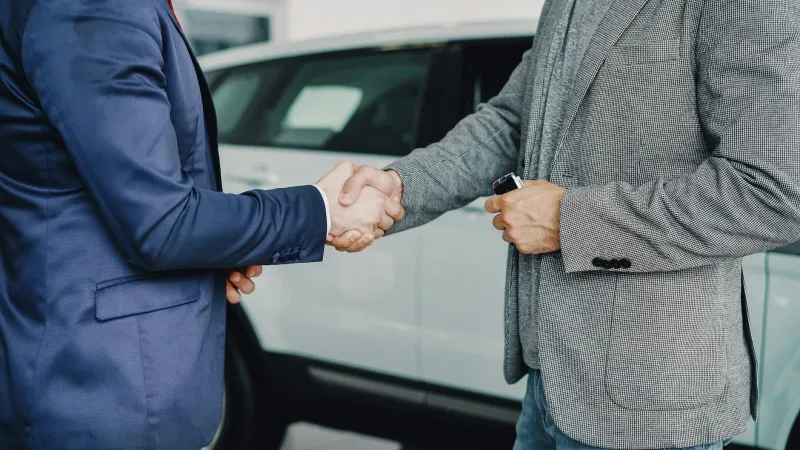
When Your Car Dealer Was Also Your Neighbor
Walk into any modern car dealership today, and you'll encounter a carefully orchestrated sales process designed by corporate headquarters three states away. Digital price tags update in real-time, financing gets approved by algorithms in distant data centers, and your salesperson might be working their first week on the lot. It's efficient, transparent, and utterly impersonal.
But for most of the 20th century, buying a car in America was as intimate as borrowing sugar from your neighbor—because often, that's exactly what it was.
The Corner Lot That Knew Your Story
In 1955, when Americans bought nearly 8 million new cars, most of those transactions happened at small, family-owned dealerships that had been serving the same neighborhoods for decades. These weren't the sprawling auto malls we know today, but modest lots tucked between the hardware store and the five-and-dime, often run by the same family that sold your father his first Ford.
Take Charlie Morrison's Chevrolet in Akron, Ohio—a typical operation where Charlie knew not just your name, but your work schedule at the tire plant, how many kids you had, and whether your mother-in-law was still giving you grief about trading in that perfectly good Plymouth. This wasn't just friendly small-town chatter; it was essential business intelligence in an era before credit bureaus and computer databases.
 Photo: Akron, Ohio, via dynamic-media-cdn.tripadvisor.com
 Photo: Charlie Morrison's Chevrolet, via www.chess.com
When you wanted to buy a car, Charlie didn't run your credit through Experian. He called your boss, chatted with your pastor, and maybe had coffee with your brother-in-law who worked at the bank. If Charlie Morrison was willing to finance your Bel Air, it meant something in the community—it was a public endorsement of your character.
The Handshake That Launched a Thousand Commutes
The financing arrangements that emerged from these relationships would make modern compliance officers break out in cold sweats. Deals were sealed with handshakes, payment schedules adjusted for harvest seasons or factory layoffs, and trade-ins were evaluated based on how well you'd maintained your last purchase from the same dealer.
"Put $200 down and we'll work out the rest" wasn't just a sales pitch—it was a business model built on personal reputation and community accountability. Default on a car loan in a town of 15,000 people, and everyone knew about it by Sunday service.
This system created an entirely different relationship between Americans and their automobiles. Cars weren't just transportation; they were symbols of your standing in the community, endorsed by dealers who staked their own reputations on your reliability.
When Service Meant More Than Oil Changes
The relationship didn't end at the sale. Your neighborhood dealer was also your mechanic, your parts supplier, and often your automotive counselor for the next decade. They knew every quirk of the engine they'd sold you, every recall notice, and exactly how that particular model would age.
When your transmission started acting up three years later, you didn't call a 1-800 number or consult online forums. You walked into Charlie's service bay, where the same mechanic who had prepped your car for delivery would diagnose the problem while asking about your daughter's wedding plans.
The Algorithm Ate Main Street
Today's car buying experience optimizes for everything those neighborhood dealers couldn't: price transparency, financing options, inventory access, and legal compliance. You can configure your dream car online, get pre-approved for financing through your smartphone, and have detailed reliability ratings for every model ever made.
But something fundamental was lost in this evolution. Modern car buying is a transaction between strangers, mediated by corporate policies and computer algorithms. Your credit score matters more than your character, and the person selling you a $40,000 SUV might not remember your name by the time you drive off the lot.
The rise of direct-to-consumer brands like Tesla has pushed this trend even further. You can now buy a car the same way you'd order a laptop—clicking through options online and having it delivered to your driveway by someone you'll never see again.
What We Gained and Lost on the Digital Lot
There's no denying the benefits of modern car buying. Prices are more competitive, financing is more regulated, and consumers have access to information that would have taken weeks to gather in 1955. You can't be discriminated against based on your neighborhood or denied financing because the dealer's cousin doesn't like your politics.
But we've also lost something that no algorithm can replicate: the accountability that comes from doing business with people who have to look you in the eye at the grocery store, the flexibility of payment arrangements based on personal circumstances, and the deep product knowledge that comes from selling the same brands to the same families for generations.
The neighborhood car dealer didn't just sell transportation—they were custodians of the American dream, helping families upgrade their lives one carefully financed vehicle at a time. In a world where buying a car has become as impersonal as ordering takeout, it's worth remembering when that monthly payment came with a handshake and a promise that meant something to everyone involved.