Saturday Night at the Palace: When Movies Were Events, Not Entertainment
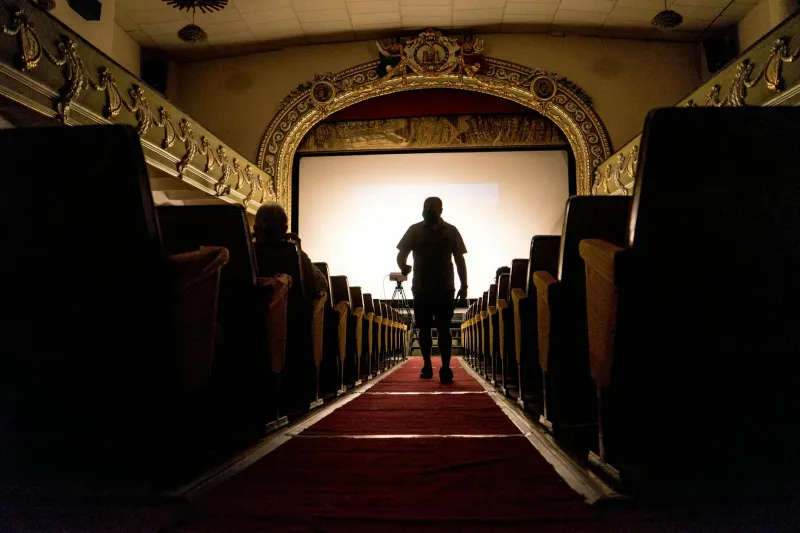
The Cathedral of Dreams
The Paramount Theater in downtown Oakland stood like a golden palace on Saturday evening in 1955, its marquee blazing with thousands of light bulbs that could be seen for blocks. Families dressed in their finest clothes — fathers in suits and ties, mothers in carefully pressed dresses, children scrubbed clean and combed neat — made their way up the red-carpeted steps into what felt more like a European opera house than a neighborhood cinema.
Inside, a uniformed usher with white gloves guided them through a lobby decorated with crystal chandeliers, marble columns, and murals depicting scenes from classical mythology. The main auditorium seated 2,800 people beneath a ceiling painted to look like a starlit sky, complete with twinkling lights and slowly moving clouds. This wasn't just going to see a movie — this was an event, a ritual, a weekly pilgrimage to a temple of entertainment that treated audiences like honored guests rather than consumers.
The evening's program would last nearly four hours, and nobody minded. In fact, they expected it.
The Full Evening's Entertainment
At 7:00 PM sharp, the heavy velvet curtains parted to reveal not the main feature, but a carefully curated program designed to inform, amuse, and transport audiences through a complete emotional journey. First came the newsreel — ten minutes of current events from around the world, narrated with the authoritative voice that made even mundane political developments sound momentous.
"This week in Washington, President Eisenhower signed legislation..." the announcer would intone as grainy footage of the White House filled the massive screen. For many Americans, this was their primary source of visual news, their window into events happening beyond their local communities. The newsreel wasn't just filler — it was how the nation stayed informed and connected.
Next came the cartoon, usually a Tom and Jerry or Bugs Bunny short that had children giggling and adults chuckling along. These weren't throwaway animations but carefully crafted mini-masterpieces from studios like Warner Bros. and MGM, featuring top-tier voice acting, sophisticated humor, and production values that rivaled the main features.
The Art of the Double Feature
After the cartoon came the first feature film — often a B-movie Western, comedy, or crime drama that served as the evening's appetizer. These weren't considered lesser films but rather different kinds of entertainment, each serving a specific purpose in the evening's emotional arc. A screwball comedy might precede a serious drama, or a Western might warm up the audience for a romance.
Then came intermission — a twenty-minute break that was as much a part of the experience as the films themselves. The house lights came up, revealing the theater's ornate architecture in all its glory. Families stretched their legs, visited the concession stand for fresh popcorn and candy, and socialized with neighbors they might not have seen since the previous Saturday night.
The concession stands of the era were elaborate affairs, often featuring fresh-made candy, multiple flavors of popcorn, and even full meal service. Some theaters employed uniformed candy girls who walked the aisles during intermission, selling treats from ornate trays. The economics were different too — concessions were reasonably priced amenities rather than the primary profit centers they've become today.
The Palace Architecture
The movie palaces of the 1920s through 1950s were architectural marvels designed to transport audiences into fantastical environments. The Egyptian Theater in Hollywood featured hieroglyphics and pharaoh statues. The Chinese Theater had pagoda-style architecture and ornate dragons. The Atmospheric theaters, like the Avalon in Chicago, were designed to make audiences feel like they were sitting in an outdoor courtyard beneath a starlit sky.
These theaters employed full-time maintenance crews, decorative artists, and even live organists who provided pre-show entertainment on massive Wurlitzer organs that rose from hidden chambers beneath the stage. The organ music wasn't just background noise — it was a performance in itself, with skilled musicians who could make the instrument sound like an entire orchestra.
Air conditioning was a major selling point, advertised prominently on marquees during summer months. "Cool Inside!" the signs proclaimed, offering relief from sweltering city heat in an era before home air conditioning was common. For many families, the Saturday night movie was as much about escaping the weather as it was about entertainment.
The Communal Ritual
What made the movie palace experience fundamentally different from today's cinema was its communal nature. Everyone in town went to the same theaters, watched the same programs, and shared the same cultural references. The Saturday night movie was a social institution that brought together people across economic and social lines in a shared experience.
Children would attend special matinee programs featuring serials — ongoing adventure stories that continued week after week, ending each episode with a cliffhanger that guaranteed their return. "Will Buck Rogers escape the death ray?" "Can Superman save Lois Lane from the runaway train?" These weren't just entertainment but weekly appointments that structured childhood social life.
Teenagers used movie theaters as sanctioned dating venues, with strict social protocols about appropriate behavior and parental supervision. The balcony sections were often designated as "lovers' lanes" where young couples could hold hands in relative privacy while still remaining within acceptable social boundaries.
The Beginning of the End
Television didn't immediately kill the movie palace experience, but it began the slow erosion that would eventually transform American film exhibition. As TV sets became common in the 1950s, families could watch entertainment at home, reducing the need for the elaborate theatrical experience that had defined moviegoing for three decades.
The suburban migration that followed World War II also changed the economics of downtown movie palaces. Families moving to new subdivisions wanted entertainment closer to home, leading to the development of smaller neighborhood theaters and, eventually, suburban shopping mall cinemas.
The rise of the automobile culture meant that drive-in theaters became popular alternatives, offering a different kind of communal experience based on privacy and convenience rather than grandeur and formality. Young families with small children found drive-ins more practical than elaborate downtown theaters.
The Multiplex Revolution
By the 1970s, the movie palace era was largely over. The grand theaters were demolished, converted to other uses, or subdivided into smaller screening rooms. The multiplex model that emerged prioritized efficiency over experience — multiple smaller theaters showing different films simultaneously, maximizing the number of showings per day and reducing the overhead costs associated with elaborate architecture and large staffs.
The new model worked brilliantly from a business perspective. Multiplexes could show the same popular film in multiple theaters simultaneously, reducing wait times and accommodating larger audiences. They could also offer more diverse programming, showing everything from blockbusters to art films to foreign language movies in the same complex.
But something essential was lost in the translation. The moviegoing experience became transactional rather than ceremonial. Theaters were designed for efficiency rather than beauty. The communal aspect disappeared as audiences were divided among multiple screening rooms, and the elaborate pre-show programming was eliminated in favor of advertising and previews.
What Netflix Can't Replicate
Today's streaming culture has completed the transformation that began with television in the 1950s. We can watch virtually any film ever made from the comfort of our homes, with perfect picture quality and surround sound that rivals any theater. We can pause for bathroom breaks, rewind confusing scenes, and watch at our own pace without worrying about missing anything.
Yet something irreplaceable has been lost. The shared cultural experience of watching the same program with hundreds of strangers, the anticipation of waiting a full week to see how the serial would continue, the ritual of dressing up and making an evening of entertainment — these communal aspects of moviegoing shaped American culture in ways that individual consumption cannot replicate.
The movie palace era represented a brief moment in American history when technology, economics, and social values aligned to create a form of mass entertainment that was both populist and luxurious, both accessible and special. Every family could afford a Saturday night at the movies, but the experience they received was genuinely palatial.
The Lost Art of Anticipation
Perhaps most significantly, the movie palace era was built on anticipation rather than instant gratification. Audiences waited all week for Saturday night's program. They didn't know exactly what they would see beyond the main feature — the newsreel, cartoon, and second feature were often surprises. This element of anticipation and discovery created a different relationship with entertainment, one based on patience and delayed gratification rather than immediate consumption.
The ornate theaters, elaborate programming, and communal ritual of moviegoing represented an America that believed entertainment should be an event, not just a product. It was a culture that dressed up for leisure, that valued shared experiences over individual convenience, and that understood the difference between consuming content and participating in a cultural tradition.
The multiplex succeeded in making movies more accessible and profitable, but it could never replicate the sense of occasion that made Saturday night at the palace feel like stepping into another world entirely.