The Art of Mixing Medicine: When Your Local Pharmacist Was Part Chemist, Part Family Doctor
The Neighborhood Apothecary
Walk into any pharmacy today and you'll find aisles of greeting cards, energy drinks, and makeup leading to a counter where a pharmacist briefly counsels you through a plexiglass window. But step back to 1955, and the local drugstore was an entirely different world—one where the pharmacist was equal parts scientist, counselor, and community fixture.
Back then, Herb Morrison knew every customer who walked into Morrison's Pharmacy on Elm Street. He knew Mrs. Patterson's arthritis flared up in winter, that young Tommy Jenkins needed his asthma powder mixed fresh each week, and that Dr. Sullivan preferred his heart medication compounded with a specific binding agent. This wasn't just customer service—it was the practice of pharmaceutical artistry.
When Medicine Was Made, Not Manufactured
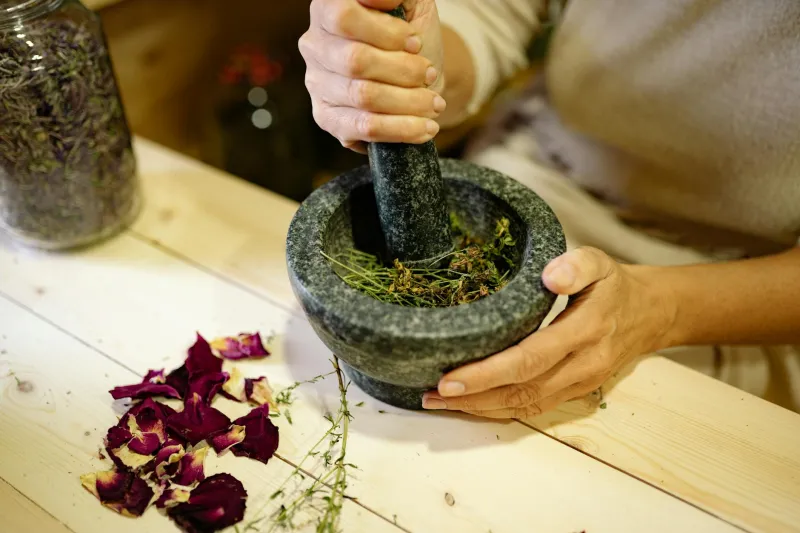
The defining difference between yesterday's pharmacy and today's wasn't just personal service—it was the actual creation of medicine. Mid-century pharmacists spent their days grinding powders in marble mortars, measuring precise amounts of active ingredients, and hand-filling capsules one by one. Nearly 70% of prescriptions required some form of compounding, mixing, or custom preparation.
Pharmacists maintained extensive knowledge of drug interactions, not from computer databases, but from years of study and hands-on experience. They understood how different compounds behaved when mixed, which combinations enhanced effectiveness, and how to adjust formulations for individual patients. A prescription wasn't just counted out from a bottle—it was crafted.
Consider this: in 1960, a typical neighborhood pharmacy might compound 200 different preparations regularly. Today, most chain pharmacies compound fewer than 20, and many don't compound at all.
The Corner Drugstore as Community Hub
These pharmacies served as informal medical advisors for their neighborhoods. When someone had a persistent cough or couldn't afford a doctor visit, they'd often stop by the pharmacy first. Pharmacists recommended over-the-counter remedies, explained how to properly take medications, and frequently caught dangerous drug interactions before they happened.
The soda fountain wasn't just a quaint addition—it was strategic. While customers waited for their prescriptions to be prepared (which could take 30 minutes or more), they'd grab a Coke or ice cream. This gave pharmacists time to work and created a social atmosphere where health conversations happened naturally.
The Efficiency Revolution
The transformation began in earnest during the 1970s and accelerated through the 1980s. Pharmaceutical companies started mass-producing most common medications in standardized doses. What once required 20 minutes of careful compounding could now be completed in two minutes of counting and labeling.
Chain pharmacies like CVS and Walgreens revolutionized distribution and efficiency. Automated dispensing systems, computerized inventory management, and centralized purchasing drove down costs dramatically. Insurance companies embraced these efficiencies, negotiating better rates with large chains than small independents could match.
By 1990, less than 10% of prescriptions required compounding. Today, that number sits around 3%.
What We Gained and Lost
The benefits of modern pharmacy are undeniable. Medications are more consistent, safer, and significantly cheaper. A prescription that might have cost $15 in 1970 (roughly $110 in today's dollars) can now be filled for $4 at many chain stores. Automated systems catch drug interactions more reliably than human memory ever could.
Mail-order pharmacies deliver 90-day supplies directly to your door. Drive-through windows let you pick up prescriptions without leaving your car. These conveniences would have seemed magical to someone in 1955.
But something intangible disappeared in the transition. The neighborhood pharmacist who knew your medical history, remembered your allergies without consulting a computer, and could explain exactly why your medication worked the way it did became largely extinct. The artisanal aspect of pharmacy—the careful measurement, mixing, and customization—gave way to industrial efficiency.
The Human Cost of Progress
Today's pharmacists are highly educated professionals, but their role has fundamentally changed. Instead of crafting individual medications, they primarily verify prescriptions filled by technicians and provide brief consultations between insurance calls and inventory management.
Many veteran pharmacists describe feeling more like retail managers than healthcare providers. The deep relationships that once existed between pharmacists and their communities have been replaced by corporate efficiency metrics and throughput targets.
When Faster Meant Less Personal
The evolution of American pharmacy perfectly captures our broader relationship with progress. We've gained incredible efficiency, consistency, and affordability. We've lost the personal touch, the craftsmanship, and the deep community connections that once defined healthcare.
Whether this trade-off was worth it depends on what you value most: the convenience and reliability of modern systems, or the personal care and artistry of the past. What's certain is that the neighborhood pharmacist who knew your name and mixed your medicine by hand represents a model of healthcare that we'll never see again.
In our rush toward efficiency, we sometimes forget what we've left behind—and perhaps, what we might want to bring forward into whatever comes next.