When America Ate Together: How the Lunch Counter Built a Nation's Midday Ritual
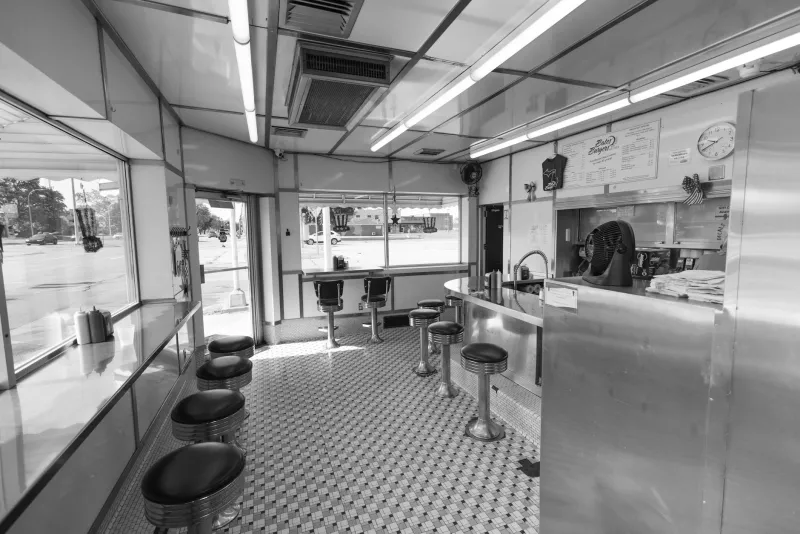
The Daily Gathering Place
Every weekday at 12:15 PM, the lunch counter at Miller's Five & Dime would fill with the same familiar faces. There was Janet from the insurance office next door, always ordering the tuna melt. Frank, the mailman, who'd grab a quick coffee and piece of apple pie between routes. Mrs. Henderson from the dress shop would slide onto the red vinyl stool, chatting with whoever happened to be sitting beside her about the weather, the news, or her grandson's baseball game.
This wasn't just lunch—it was America's daily democracy in action.
For most of the 20th century, the lunch counter served as the unofficial town square of working America. Whether tucked inside Woolworth's, Kresge's, or the local pharmacy, these simple establishments fed millions of Americans every single day. A hot meal, served on real plates, eaten alongside neighbors and strangers alike, all for little more than a dollar.
Today, that world has vanished so completely that most Americans under 40 have never experienced it.
The Economics of the Common Meal
In 1965, you could walk into virtually any American downtown and find a lunch counter serving a complete meal—soup, sandwich, vegetable, and coffee—for $1.25. That's roughly $12 in today's money, but the comparison misses the point entirely.
The lunch counter wasn't just affordable; it was predictable, accessible, and built into the rhythm of every working day. You didn't need to plan ahead, download an app, or calculate delivery fees. You simply walked downstairs from your office, took a seat, and joined the daily ritual that connected every American worker, from secretary to shop owner.
The menu was simple by design. Most counters offered the same reliable options: meatloaf with mashed potatoes, grilled cheese with tomato soup, or the daily special written on a chalkboard. The limited choices weren't a bug—they were a feature. Decision fatigue didn't exist when your biggest choice was pie or pudding for dessert.
Compare this to today's lunch reality. The average office worker spends 15 minutes scrolling through delivery apps, comparing prices that can range from $8 to $25 for a single meal. Add delivery fees, tips, and the inevitable upcharge for "premium" ingredients, and lunch has become both expensive and isolating.
The Vanishing Pause
But the real loss isn't economic—it's social and cultural.
The lunch counter forced a pause in the American workday. At noon, offices emptied as workers stepped away from their desks and into the shared space of the street. The walk to lunch, the wait for a seat, the conversation with the person beside you—all of this created natural breaks that allowed minds to reset and social connections to form.
"You'd learn more about your town in 30 minutes at Murphy's lunch counter than you would reading the newspaper for a week," recalls Robert Chen, 78, who worked downtown Chicago in the 1960s. "The banker would sit next to the bus driver, and they'd both complain about the same pothole on Main Street. That's how things got fixed back then."
Today's lunch "hour" has shrunk to whatever time you can grab between Zoom calls. Most American office workers eat at their desks, scrolling through emails while mechanically consuming meals delivered in disposable containers. The shared midday meal—once a universal American experience—has been replaced by individual efficiency.
The Architecture of Connection
The physical design of lunch counters encouraged interaction in ways that modern dining actively discourages. The long, continuous counter meant you sat shoulder-to-shoulder with strangers, facing the same direction, watching the same short-order cook flip burgers and pour coffee.
This arrangement was accidentally brilliant for human connection. You could easily strike up a conversation with your neighbor without the awkwardness of direct eye contact. The shared experience of waiting for food, watching it being prepared, and eating in the same rhythm created natural opportunities for the small talk that builds community.
Modern restaurants, by contrast, are designed for privacy and speed. Tables face away from each other, booths create barriers, and fast-casual chains optimize for quick turnover rather than lingering conversation. Even when we do eat out for lunch, we're more likely to stare at our phones than chat with strangers.
The Death of a Ritual
The decline of the lunch counter began in the 1970s and accelerated through the 1980s as shopping malls replaced downtown districts and office parks scattered workers across suburban landscapes. The rise of fast food offered speed and convenience, while the cultural shift toward "power lunches" and working meals turned the midday break into another form of productivity.
By the 1990s, most department store lunch counters had closed. The few that remained became nostalgic curiosities rather than daily necessities. The final blow came with the digital revolution, which made it possible—and eventually expected—to work through lunch entirely.
Today, DoorDash and Uber Eats promise to deliver any cuisine to your desk within 30 minutes. It's undeniably convenient, offering more variety and customization than any lunch counter ever could. But convenience isn't the same as connection, and variety isn't the same as community.
What We Lost When We Gained Efficiency
The disappearance of the lunch counter reflects a broader transformation in how Americans work and live. We've gained flexibility, choice, and efficiency. We've lost routine, predictability, and the accidental encounters that build social fabric.
The lunch counter represented something uniquely American: democratic dining where social class mattered less than showing up. It was a daily reminder that, despite our differences, we all needed the same basic things—food, rest, and human connection in the middle of a long day.
That reminder, served daily on a plate for $1.25, is something no app can deliver.