Six O'Clock and That Was It: When the News Had an Off Switch
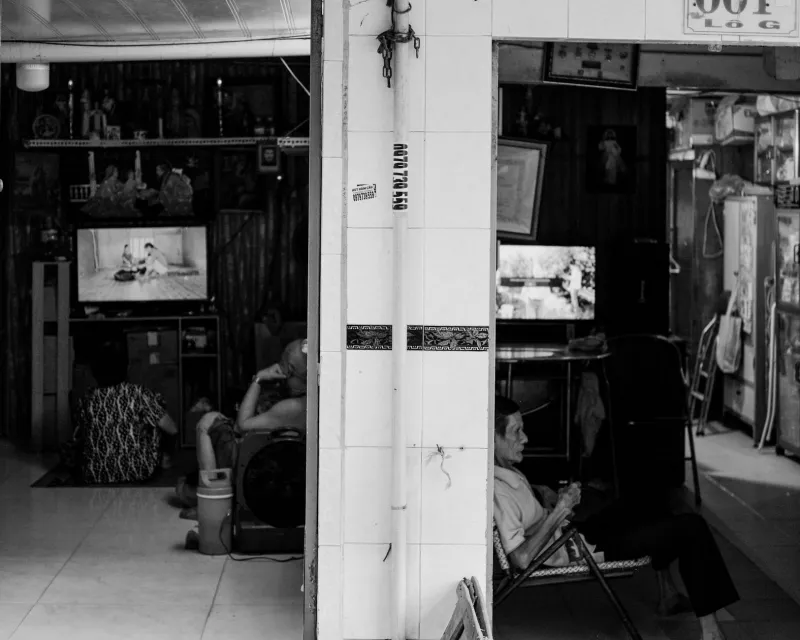
For most of the twentieth century, Americans got the news once a day and then moved on with their lives. There were no push notifications, no breaking alerts, no algorithm deciding what you needed to feel angry about before breakfast. The news was a ritual, not a reflex — and the difference turns out to matter more than most people realize.
Somewhere between Walter Cronkite and the Twitter feed, the news stopped being something you consumed and became something that consumed you.
 Photo: Walter Cronkite, via a.poki-cdn.com
The Evening Paper and the Nightly Broadcast
For decades, the rhythm of American news was deeply predictable. The morning paper landed on your doorstep with yesterday's events, reported and edited overnight. The evening paper — and yes, most cities had one — wrapped up the day's developments in time for dinner. And then, at six or six-thirty, one of three television networks delivered a thirty-minute broadcast that summarized everything a citizen needed to know.
That was it. When the broadcast ended, the news ended. Walter Cronkite signed off, the set went dark, and the country went back to its evening. There was no second act, no panel of commentators arguing for another two hours, no website refreshing itself every forty-five seconds with new angles on the same story.
If something happened overnight, you found out in the morning paper. If something happened during the workday, you heard about it from a colleague or caught a radio update on the drive home. News traveled at the speed of human attention, not the speed of a server farm.
A Nation That Watched Together
There was something quietly remarkable about the shared nature of that old system. On any given evening in 1968 or 1972, tens of millions of Americans were watching the same broadcast, hearing the same facts delivered in the same measured tone, and then going to bed with roughly the same picture of the world in their heads.
That didn't mean everyone agreed on what the facts meant — American political disagreement is as old as the country itself. But there was a shared informational baseline that made conversation possible. When your neighbor mentioned the news, you knew which news they meant. There was only one version in wide circulation.
The networks weren't perfect. They had blind spots, biases, and stories they didn't cover. But they operated under a professional ethic that treated accuracy as the primary obligation and sensationalism as something to be avoided, largely because there wasn't enough airtime to waste on noise.
The Cable Disruption
CNN launched in 1980 with a simple and genuinely radical premise: news, all day, every day, around the clock. For the first decade or so, the format worked reasonably well — there was enough happening in the world to fill the hours, and the network maintained something close to the old broadcast standard of straight reporting.
But twenty-four hours is a lot of time to fill, and genuine news doesn't generate itself on a convenient schedule. The solution the industry landed on was opinion, conflict, and urgency. If you couldn't fill the hour with new facts, you could fill it with people arguing about old ones. If nothing dramatic was happening, you could frame routine events as potential crises. The chyron — that scrolling band of text at the bottom of the screen — became a permanent feature, creating a visual impression of constant emergency even during ordinary news cycles.
By the mid-2000s, cable news had restructured the entire emotional architecture of how Americans related to current events. And then the internet arrived and made cable news look restrained by comparison.
The Notification Economy
The smartphone didn't just deliver news faster. It made news inescapable. Push notifications from news apps, social media feeds curated by engagement algorithms, and the cultural pressure to be informed in real time turned news consumption from a daily ritual into a constant ambient state.
The algorithms that power social feeds have one primary goal: keep users engaged. And the research on human psychology is unambiguous — threat, outrage, and conflict keep people engaged far more reliably than nuance or good news. So the feeds learned to surface the most alarming, the most enraging, the most divisive content first. Not because the world got more alarming, but because alarming content performs better.
The result is a media environment that generates the subjective experience of permanent crisis — regardless of what's actually happening in the world on any given day.
What the Constant Stream Costs
The public health data on this shift is not encouraging. Rates of anxiety, particularly among adults who identify as heavy news consumers, have risen steadily alongside the expansion of the always-on news cycle. A 2020 American Psychological Association survey found that more than half of Americans said the news was a significant source of stress in their daily lives — a finding that would have baffled the average citizen of 1975, who watched thirty minutes of Cronkite and slept fine.
Attention spans have shortened. The ability to sit with incomplete information — to wait for a story to develop before forming a strong opinion — has atrophied across the population. And community trust, the sense that your neighbors share a common reality with you, has eroded in ways that make civic life measurably harder.
None of that is inevitable. It's the result of specific design choices made by media companies optimizing for engagement rather than understanding.
The Off Switch Nobody Uses Anymore
The old news cycle had a built-in circuit breaker. The broadcast ended. The paper got set aside. The world kept turning, but your awareness of it paused for the night, and that pause turned out to be important.
It gave people time to think, to talk to each other about what they'd heard, to let new information settle before the next wave arrived. It treated citizens as adults who could be informed once a day and trusted to carry that information responsibly.
That world is gone. But understanding what it looked like — and what it felt like — might be the first step toward building something a little more like it again.