When Recess Actually Meant Risk: How America's Playgrounds Went From Thrilling to Terrifying (for Lawyers)
When Recess Actually Meant Risk: How America's Playgrounds Went From Thrilling to Terrifying (for Lawyers)
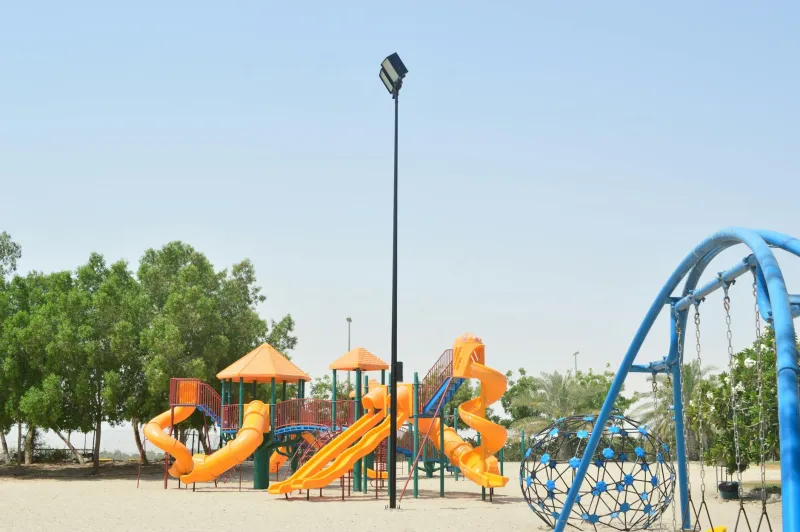
Walk onto any elementary school playground today and you'll find a curious sight: children playing on equipment that looks like it was designed by a committee of anxious insurance adjusters. The slides are barely three feet high, the monkey bars have been replaced with "overhead ladders" positioned over thick rubber mats, and everything is rounded, padded, and engineered to prevent even the slightest possibility of a scraped knee.
It wasn't always this way. Just thirty years ago, American playgrounds were wonderlands of genuine physical challenge — and genuine physical risk.
The Iron Age of Play
In the 1970s and 80s, the typical American school playground featured equipment that would send today's safety inspectors into cardiac arrest. Metal slides towered fifteen feet high, their surfaces hot enough in summer to leave actual burn marks on young legs. Kids lined up anyway, accepting the risk as part of the thrill.
Merry-go-rounds spun fast enough to generate real centrifugal force, launching children who couldn't hold on into the surrounding dirt. Jungle gyms rose like industrial scaffolding, all sharp angles and unforgiving metal bars. The ground beneath? Packed dirt, gravel, or if you were lucky, some wood chips that had been there since the Carter administration.
"We had this one piece of equipment called the 'rocket ship,'" remembers Sarah Mitchell, now 42, recalling her elementary school days in suburban Chicago. "It was basically a metal cone about twelve feet tall with bars you could climb up the outside. No safety rails, no soft landing. Kids would race to the top and jump off. The school nurse knew us all by name."
The most legendary piece of playground equipment was the seesaw — not the spring-loaded, individual seats of today, but massive wooden planks balanced on metal fulcrums. These weren't just toys; they were physics lessons in leverage and trust. One kid jumping off unexpectedly could send their partner crashing down, but that was considered part of learning playground politics.
The Lawsuit That Changed Everything
The transformation of American playgrounds didn't happen overnight. It began in the late 1980s when personal injury lawsuits against school districts started mounting. The case that changed everything was Braun v. School District, where parents successfully sued after their child was injured on a traditional monkey bar set.
Sudenly, school administrators found themselves facing a choice: keep the equipment that had entertained generations of children, or avoid potentially bankrupting legal battles. The choice was obvious, if unfortunate.
"Insurance companies started demanding specific safety standards," explains Dr. Marcus Chen, who studies playground design at the University of California. "Equipment manufacturers responded by creating products that met these new liability requirements, but the focus shifted from 'Will kids enjoy this?' to 'Can anyone possibly get hurt on this?'"
By the mid-1990s, the Consumer Product Safety Commission had issued comprehensive playground safety guidelines. Suddenly, every piece of equipment needed to meet specific height restrictions, impact ratings, and spacing requirements. The age of adventure was over; the age of litigation prevention had begun.
The Rubberized Revolution
Today's playground tells the story of American risk aversion in rubber and plastic. Modern equipment rarely exceeds eight feet in height. Slides feature low-angle approaches and safety rails. Monkey bars, when they exist at all, are positioned over thick rubber matting designed to cushion any fall.
The surfaces themselves represent perhaps the most dramatic change. Gone are the dirt, gravel, and asphalt of previous generations, replaced by engineered surfaces with specific impact ratings. Some schools spend more on playground surfacing than entire playground installations cost in the 1980s.
"We've essentially eliminated the possibility of serious injury," says playground designer Jennifer Walsh, "but we may have eliminated something else in the process — the chance for kids to learn risk assessment, physical courage, and how to handle genuine challenges."
What We Lost in Translation
The old playgrounds weren't just about equipment; they were about learning to navigate risk in a controlled environment. Children developed genuine physical skills — balance, coordination, strength — because the equipment demanded it. More importantly, they learned to assess risk for themselves.
Modern playground equipment, designed to be safe for the least coordinated child, often fails to challenge even average kids. Physical therapists report increasing numbers of children with poor balance, weak grip strength, and underdeveloped spatial awareness — skills that previous generations developed naturally during recess.
"There's something to be said for equipment that requires actual skill to use safely," notes child development expert Dr. Patricia Vance. "When everything is designed to be foolproof, children never learn to be careful. They never develop the internal risk assessment skills that keep them safe in the real world."
The Irony of Safety
Perhaps the strangest aspect of the playground revolution is that despite all the safety improvements, childhood injury rates haven't dramatically decreased. Children still get hurt — they just get hurt differently. Instead of occasional serious injuries from playground falls, we see increases in sports-related injuries as kids who never learned basic physical skills attempt organized athletics.
Meanwhile, the generation that survived the "dangerous" playgrounds of the past grew up to become engineers, doctors, and leaders — apparently none the worse for their encounters with genuine risk during recess.
The modern American playground stands as a monument to our changing relationship with risk, childhood, and the role of institutions in protecting versus preparing young people for the world ahead. Whether we've made the right trade-off — safety for adventure, protection for preparation — remains an open question.
But one thing is certain: the kids spinning on those old merry-go-rounds until they were dizzy and laughing learned something that no amount of rubber matting can teach — that sometimes the best part of play is the part that makes your heart race just a little bit.