Where the Neighborhood Solved Its Problems Over a Hot Towel and a Shave
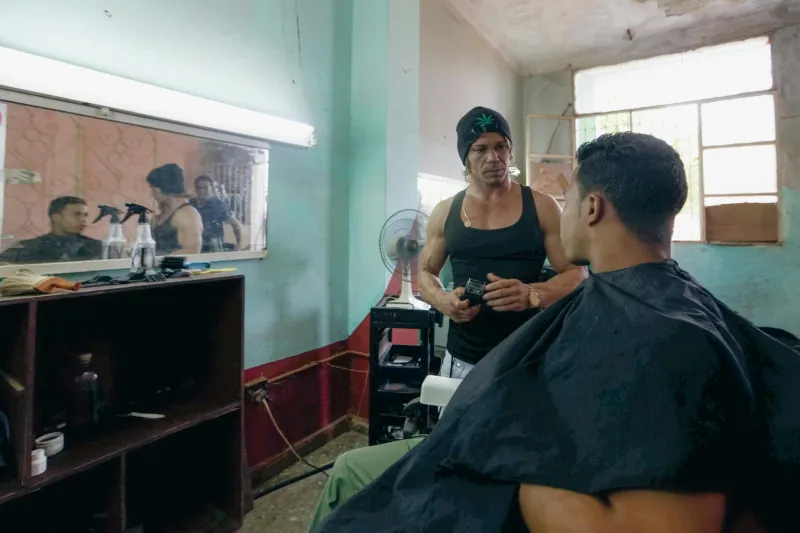
The Chair Where Democracy Lived
Walk into any modern salon chain, and you'll find efficiency. Stylists work in focused silence, customers scroll their phones, and conversations rarely extend beyond "How's your day?" and "Trim the sides a little more." It's quick, clean, and completely forgettable.
But step back sixty years, and the American barbershop was something entirely different: the neighborhood's unofficial town hall, where local politics were debated with the passion of a senate floor and community problems got solved between the hot towel and the final brush-off.
More Than Just a Haircut
In mid-century America, a visit to the barbershop wasn't an errand—it was an event. Men would arrive early just to claim a spot on the waiting bench, knowing the real entertainment happened while you watched other customers get their turn in the chair. The barber wasn't just cutting hair; he was conducting a symphony of conversation that could range from the local high school football team's chances this Friday to whether the new highway project would help or hurt downtown businesses.
Every barbershop had its regulars, men who showed up at the same time each week like clockwork. There was the retired mailman who knew every family's business, the hardware store owner who had opinions about everything, and the bank manager who could tell you which local businesses were thriving and which were struggling. Together, they formed an informal council that could make or break a political candidate's chances or rally support for a family in crisis.
The Information Highway Ran Through Main Street
Before CNN, before talk radio, before social media algorithms decided what news you'd see, there was Frank the barber and his customers. News traveled through the barbershop faster than any other medium in town. A factory layoff would be discussed and dissected before the local newspaper even heard about it. Political scandals were analyzed with forensic precision by men who may not have finished high school but possessed decades of street-smart wisdom.
 Photo: Main Street, via as2.ftcdn.net
The barbershop served as a fact-checking service too. Wild rumors got shot down by men who actually knew the people involved. Gossip was separated from genuine news through a process of collective verification that no algorithm could match. If something was true, it would survive the barbershop test. If it was nonsense, it would be laughed out of the building.
Where Boys Became Men
For young customers, the barbershop was graduate school in masculinity. Boys would sit quietly and listen as grown men debated serious topics, learning not just what to think about various issues, but how to think about them. They absorbed lessons about respectful disagreement, the art of persuasion, and the importance of backing up opinions with facts.
The barber himself often served as a mentor figure, someone who knew the boy's family history and could offer guidance that went far beyond grooming tips. Many men can still remember specific conversations from their childhood barbershop visits—discussions about work ethic, character, and responsibility that shaped their understanding of what it meant to be a contributing member of the community.
The Slow Death of the Social Haircut
The transformation began in the 1970s and accelerated through the following decades. Chain salons prioritized speed and efficiency over community connection. Unisex styling replaced the masculine ritual of the traditional barbershop. Appointment scheduling eliminated the spontaneous gathering of neighbors who might bump into each other while waiting.
Most significantly, suburban sprawl scattered the customer base. Instead of walking to the neighborhood barbershop where they'd see familiar faces, men began driving to strip mall locations where the staff rotated frequently and customer loyalty was measured in discount cards rather than decades of shared conversation.
What We Lost When Haircuts Became Transactions
Today's quick salon visit might save time, but it eliminated something irreplaceable: a space where men of different ages, backgrounds, and political views were forced to coexist and find common ground. The barbershop taught conflict resolution, community problem-solving, and the lost art of agreeing to disagree without cutting off all communication.
Modern social media promises connection but delivers isolation. Algorithm-driven feeds show us only perspectives that confirm our existing beliefs. The barbershop did the opposite—it forced exposure to different viewpoints and required face-to-face negotiation of those differences.
The Search for New Gathering Places
Some communities are recognizing what was lost and working to recreate it. A few traditional barbershops have survived and even thrived by emphasizing the social aspect of the experience. Coffee shops attempt to fill the void, but the transient nature of caffeine consumption lacks the ritualistic commitment of a monthly haircut.
Online neighborhood groups and social apps try to replicate the barbershop's information-sharing function, but they lack the accountability that came with face-to-face interaction. It's easier to spread misinformation or engage in personal attacks when you're typing on a keyboard rather than looking someone in the eye.
The Conversation We're Still Missing
America's current struggles with political polarization and community disconnection might seem like modern problems, but they're actually the predictable result of eliminating spaces where different people were required to regularly interact and find ways to get along. The neighborhood barbershop wasn't perfect—it was often an exclusively male space that reflected the social limitations of its era—but it provided something we haven't successfully replaced: a forum for working out differences through ongoing relationship rather than one-time confrontation.
Perhaps the solution isn't to bring back the barbershop exactly as it was, but to understand what made it work and find ways to recreate those conditions in modern life. Because somewhere between the hot towel and the final sprinkle of talcum powder, American men used to learn something we're still trying to figure out: how to be neighbors.