A Dollar Used to Mean Dinner: The Quiet Collapse of the Family Grocery Budget
There's a photograph a lot of people have seen some version of — a 1970s kitchen, avocado-green appliances, a mom unloading brown paper bags from the A&P. What you don't see in the photo is the receipt. But if you could, it would probably shock you.
A dozen eggs: 78 cents. A pound of ground beef: 65 cents. A loaf of bread: 28 cents. A gallon of milk: 83 cents. The whole week's haul for a family of four? Somewhere around $40 to $50. And that $40 came out of one paycheck — one job, one earner, one income holding the whole household together.
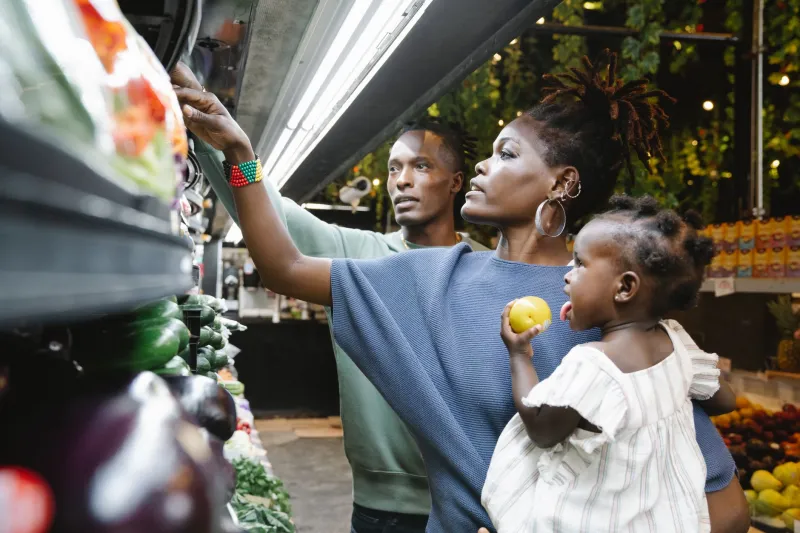
Today, that same cart might run you $200 before you've remembered the paper towels.
The Numbers Tell a Story Nobody Wants to Hear
When economists talk about inflation, they usually reach for the Consumer Price Index and start adjusting figures. But raw numbers can be misleading. The more honest comparison isn't just what did food cost then versus now — it's how many hours did someone have to work to pay for it.
In 1973, the median household income in the United States was roughly $12,000 a year. Adjusted for inflation, that's somewhere around $83,000 in today's dollars. But here's the thing: the actual median household income today hovers around $74,000. So by that measure, a typical American family is already behind where they were fifty years ago — even before you factor in that most of today's households need two earners to hit that number.
In the early 1970s, a single factory worker, postal employee, or mid-level office staffer could carry a mortgage, raise kids, and still have money left over on grocery day. That wasn't a myth. That was Tuesday.
When One Income Was Enough
The single-income household wasn't just a cultural preference — it was an economic reality that actually worked. Wages in the postwar decades tracked productivity fairly closely. When workers produced more, they generally earned more. That relationship started breaking down in the late 1970s and early 1980s, and it never really recovered.
Meanwhile, food prices climbed. Not catastrophically, not all at once — just steadily, year after year, a little faster than paychecks in most categories. Meat got more expensive. Produce got more expensive. Processed and packaged goods, the ones that fill the middle aisles, ballooned in price while often shrinking in size — a phenomenon economists call shrinkflation, where you pay the same but get noticeably less.
Families adapted. Moms went back to work — not just for fulfillment, but because the math demanded it. The dual-income household became the norm not out of ambition alone, but out of necessity. And even then, the grocery budget kept tightening.
The Supermarket Wasn't Always a Stress Test
There's something worth pausing on here: grocery shopping used to be ordinary. Not cheap, exactly, but manageable. You went to the store, you bought what you needed, and you didn't have to calculate whether the name-brand pasta was going to blow your weekly budget.
Today, a significant portion of American families report making decisions at the checkout that feel genuinely difficult. Choosing between the good yogurt and the store brand. Skipping the fresh salmon in favor of canned tuna. Putting something back because the total crept too high.
That's not a personal failure. That's a structural shift that happened over decades, quietly, without anyone calling a press conference to announce it.
What Changed at the Store
Some of the price increases are explainable. The supply chain is more complex now. Energy costs factor into transportation and refrigeration. Labor costs have risen in some sectors. Climate events have disrupted crop yields. Corporate consolidation in the food industry — where a handful of conglomerates now control enormous portions of what ends up on shelves — has also played a role in pricing power.
But there's also something simpler happening. Grocery stores learned that Americans would pay more for convenience. Pre-cut vegetables. Single-serve packaging. Meal kits. Marinated meats. Every step of preparation that used to happen in a home kitchen became a product you could buy — at a premium. The store didn't just sell you food anymore. It sold you time, and time got expensive.
The Hidden Cost Nobody Talks About
Here's the figure that doesn't make it into most inflation discussions: in 1970, the average American household spent about 13 percent of its income on food. Today, that number has dropped to around 11 percent — which sounds like progress until you realize that the households dragging that average down are high-income earners who spend a small fraction of large salaries on groceries. For families in the bottom two income quintiles, food can consume 30 to 35 percent of take-home pay.
The average obscures the strain. And the strain is real.
What We Actually Lost
It's easy to look back at the 1970s grocery bill and think: well, food was just cheaper then. But what actually changed was the relationship between work and sustenance. The idea that a person who showed up, put in a full week, and brought home a paycheck could reliably feed their family without financial anxiety — that was the deal. Not a generous deal, not a lavish one, but a functional one.
That deal has quietly expired. In its place is something more complicated: two incomes, tighter margins, more careful shopping, and a checkout line where the total still manages to surprise you.
The avocado-green kitchen is long gone. So, for a lot of families, is the feeling that feeding everyone was something you just... did.