When a Paycheck Could Buy a Front Door: The Long Goodbye to the Affordable American Home
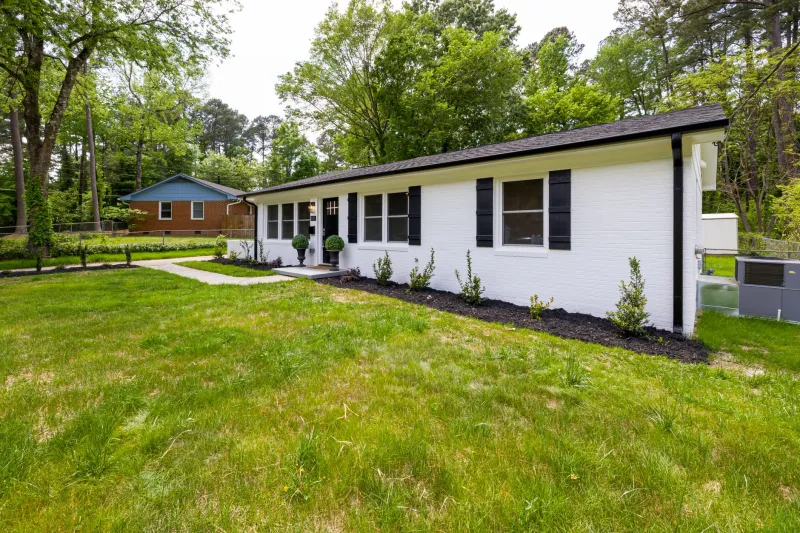
In 1950, the median price of a new home in the United States was roughly $7,400. The median household income that year was about $3,300. That means a typical American family needed a little over two years of gross income to cover the full purchase price of a house — before the mortgage, before the interest, just the raw number.
Run those same calculations today and the picture looks completely different. The median home price in the US recently crossed $400,000. Median household income sits around $74,000. That's more than five years of gross income — and that's before you factor in a down payment that has grown from a manageable hurdle into something that takes a decade to save for.
The American Dream didn't disappear. It just got a lot more expensive.
The Post-War Blueprint
To understand how we got here, it helps to understand how housing worked in the years after World War II — and why that era was genuinely unusual, not just nostalgically golden.
Returning veterans could access home loans through the GI Bill with little or no down payment. The Federal Housing Administration had standardized long-term, fixed-rate mortgages in the 1930s, making monthly payments predictable and manageable. Builders like Levitt & Sons were mass-producing modest, functional homes in new suburban communities at prices working-class families could actually afford. A Levittown house in 1947 cost $7,990 — about $400 a month in today's money when adjusted for inflation.
These weren't luxury homes. They were around 800 square feet, with two bedrooms, a single bathroom, and a small yard. But they were owned. They were stable. They were a foundation that could be built on.
A factory worker, a teacher, a postal carrier — any of these people could reasonably expect to buy one of these homes within a few years of starting their career. In many parts of the country, a single income was enough.
How the Numbers Moved
For roughly two decades after the war, home prices and incomes stayed in a relatively stable relationship. Then things started to drift.
The 1970s brought inflation, rising construction costs, and increasing land constraints in desirable areas. The 1980s introduced higher interest rates — mortgage rates hit nearly 18 percent in 1981, which made monthly payments crushing even when the purchase price seemed manageable. But rates eventually fell, and prices kept climbing.
The real acceleration came in the late 1990s and early 2000s. Loose lending standards, speculative investment, and a cultural obsession with homeownership as a wealth-building strategy pushed prices far beyond what fundamentals could justify. The 2008 crash temporarily reset values — but only temporarily. By 2012, prices were climbing again, and they've barely paused since.
Between 2020 and 2022 alone, median home prices in the US jumped by more than 40 percent. Wages did not.
The Down Payment Problem
Here's the detail that hits hardest for younger Americans trying to enter the market today.
In the post-war era, FHA loans required as little as 3 percent down. On a $7,400 house, that's $222. A young couple could save that in a matter of months.
A 3 percent down payment on today's median home is roughly $12,000 — and that's considered the floor. Most conventional loans want 10 to 20 percent. Twenty percent of $400,000 is $80,000. That's a number that takes many Americans the better part of a decade to accumulate, assuming they're able to save aggressively while also paying rent that has risen nearly as fast as home prices.
The cruel math of the current market is that the act of saving for a home has become nearly as difficult as affording the home itself.
What It Costs Beyond the Mortgage
Property taxes have also shifted in ways that don't get discussed enough. In 1950, property taxes were relatively modest and fairly uniform. Today, depending on where you live, annual property taxes on a median-priced home can run anywhere from $2,000 to over $15,000 — a recurring cost that doesn't end when the mortgage does.
Add homeowner's insurance, which has surged dramatically in recent years due to climate-related risk, and maintenance costs on an aging housing stock, and the true cost of ownership stretches well beyond the monthly mortgage payment that most affordability calculators focus on.
What's Actually Been Lost
The financial numbers tell one story. But there's a less quantifiable loss worth talking about.
When homeownership was broadly accessible, it created a kind of social stability that shaped entire communities. People stayed. They invested — not just financially, but socially. They knew their neighbors, joined local organizations, sent their kids to the neighborhood school. Homeownership was one of the central mechanisms by which ordinary Americans built equity, accumulated wealth, and established the kind of long-term security that made planning for the future feel rational.
For the generation currently in their twenties and early thirties, many of those assumptions have simply dissolved. Renting indefinitely isn't a temporary phase anymore — for a growing number of Americans, it's a permanent condition. And the wealth-building engine that homeownership represented for previous generations is increasingly available only to people who already have wealth.
A Different Kind of Foundation
None of this means the post-war housing era was perfect. The same FHA policies that made homeownership accessible to returning veterans systematically excluded Black Americans through redlining and discriminatory lending practices. The affordability of that era was real — but it wasn't evenly distributed.
What's striking, though, is that the solution to past exclusion hasn't been broader access. It's been escalating prices that make the market harder for nearly everyone who didn't get in early.
Somewhere between the $7,400 Levittown house and the $400,000 median that defines today's market, the idea that ordinary work should be enough to earn you a place to call your own got quietly renegotiated.
Most people didn't get a vote on that.