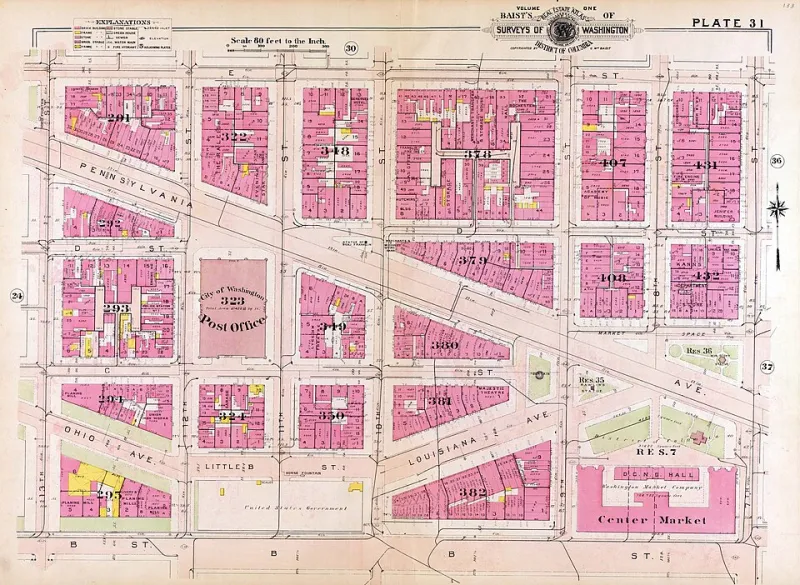
Photo: George William Baist, Public domain, via Wikimedia Commons
There was a particular kind of confidence that came from unfolding a Rand McNally road atlas across a steering wheel and actually knowing what you were looking at. Not the passive confidence of a voice telling you to turn left in 400 feet — something more earned. You had studied the route the night before. You had traced it with your finger. You knew the highway numbers, the approximate mileage between exits, and the name of the town where you planned to stop for gas. If something went wrong, you figured it out. That was just part of driving somewhere new.
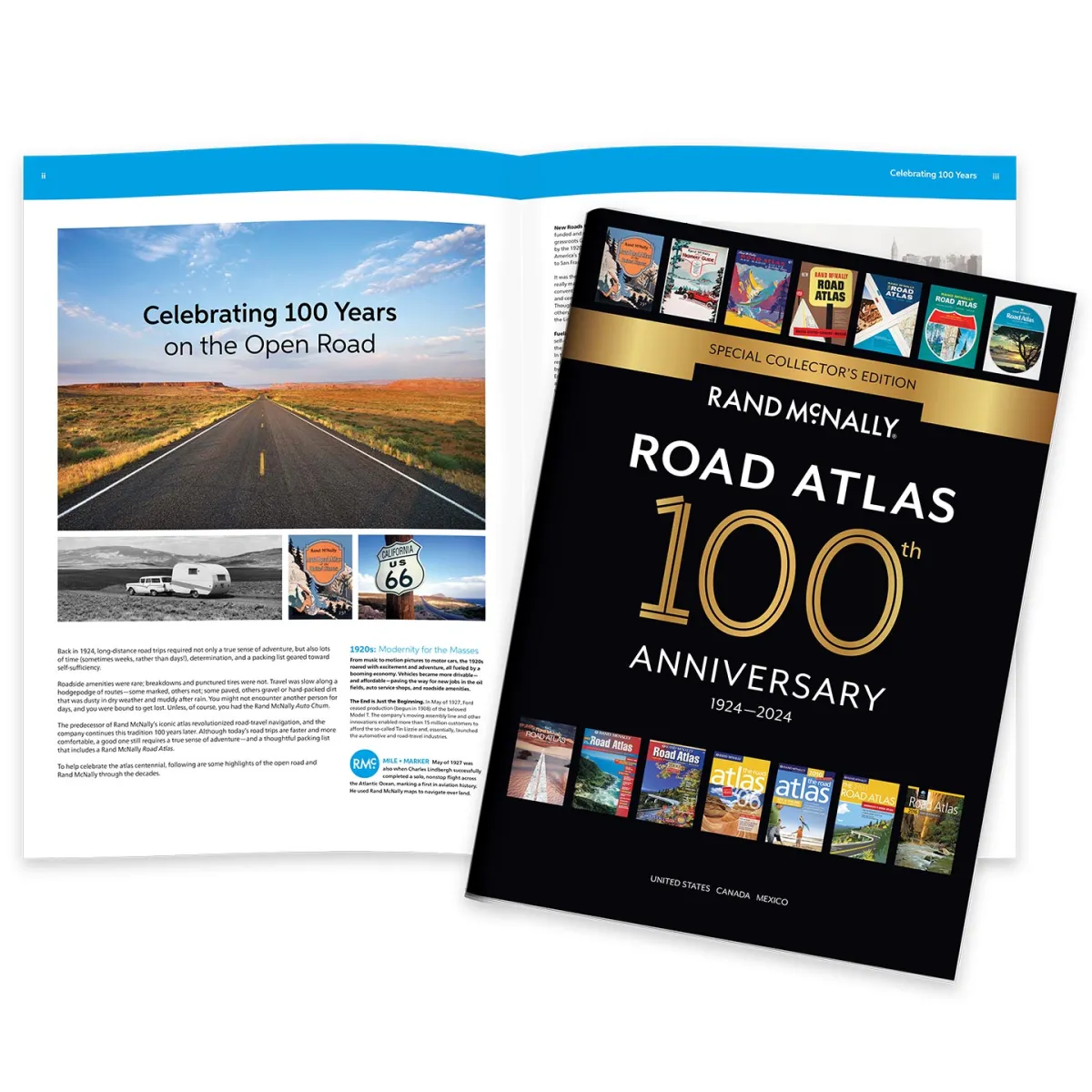 Photo: Rand McNally, via help.randmcnally.com
Today, most Americans couldn't navigate across their own county without a signal. That's not an insult — it's a structural shift in how we've organized our relationship with physical space. And it happened faster than almost anyone noticed.
The Atlas Was a Ritual, Not Just a Reference
For most of the 20th century, road atlases were household staples. Gas stations sold them. Rest stops displayed racks of them. Families kept a dog-eared copy in the glove compartment the way they kept a spare tire in the trunk — because at some point, you were going to need it.
But using a road atlas wasn't passive. It required spatial reasoning. You had to understand scale, orient yourself to cardinal directions, and mentally translate a two-dimensional grid into a three-dimensional journey. You had to flip between the state overview page and the city inset. You had to calculate whether the shortcut through the smaller county road would actually save time or just look shorter on paper.
Kids who grew up in the back seat during family road trips often became the designated navigator by age ten. Reading the map was a skill, passed down the way cooking or fishing was passed down — by doing it alongside someone who already knew how.
Gas Stations Were the Original Search Engine
When the map wasn't enough — when you'd taken a wrong turn or the road construction had rerouted everything — you stopped and asked. And the person you asked was almost always the attendant at the nearest gas station.
This wasn't a minor transaction. Gas station attendants in mid-century America were local knowledge hubs. They knew which bridges flooded in spring. They knew the diner on Route 9 that was worth the detour and the one that absolutely wasn't. They could sketch a route on a paper napkin in under a minute and hand it to you with enough confidence that you actually trusted it.
That napkin map — a few arrows, some landmark names, maybe a circled intersection — was a form of communication that required the attendant to understand your starting point, your destination, and your likely comfort level with back roads. It was brief, human, and remarkably effective.
Landmarks Were the Language of Direction
Pre-GPS navigation ran on landmarks the way modern navigation runs on coordinates. Nobody gave you a turn-by-turn breakdown measured in feet. They told you to turn left at the old Sunoco station, go past the water tower, and look for the red barn about a mile before the turnoff.
This meant that navigating required you to actually look at your surroundings. You were reading the landscape in real time, matching what you saw against what you'd been told or what you'd memorized from the map. You were engaged with place in a way that's genuinely difficult to replicate when a voice is doing all the cognitive work for you.
It also meant that when you arrived somewhere after navigating it yourself, you actually knew where you were. You could find it again. You could describe it to someone else. The destination lived in your memory because you had worked to get there.
What GPS Actually Changed
GPS navigation is one of the most genuinely useful technologies ever built into a consumer device. Nobody's seriously arguing otherwise. Getting lost used to have real consequences — missed appointments, wasted fuel, genuine safety concerns in unfamiliar areas. Reliable navigation removes those risks, and that matters.
But the tradeoff is quieter than the benefit. Studies in cognitive science have consistently found that people who rely on GPS navigation develop weaker spatial memory of the routes they travel. When you outsource the wayfinding entirely, the brain doesn't build the mental map it would otherwise construct. You arrive at your destination without really knowing how you got there.
There's also something lost in the texture of travel itself. The old model of road-tripping involved a degree of uncertainty that was uncomfortable and, in retrospect, kind of wonderful. You didn't always know exactly how far the next exit was. You had to make judgment calls. You occasionally ended up somewhere you hadn't planned on, and sometimes that turned out to be the best part of the trip.
The Map You Made in Your Head
People who grew up navigating by atlas tend to carry a different kind of geographic intuition than people who grew up with smartphones. Ask someone who learned to drive in the 1970s how to get from Nashville to Memphis, and they'll probably sketch it for you without hesitation — not just the highways, but the general shape of the state, the river, the rough distances. It's stored in the mind the way a song is stored, because it was learned through repetition and attention.
That kind of embodied knowledge is harder to build now, and most people don't try. Why memorize a route when your phone will reconstruct it on demand every single time?
The answer, if there is one, probably has less to do with nostalgia and more to do with what we're quietly giving up each time we hand the navigation over completely. Not just a skill — but a certain kind of presence. A particular way of being somewhere, rather than just arriving there.
The road atlas is still out there if you want one. Rand McNally still prints them. But the last time most Americans unfolded one with genuine purpose, the gas was under a dollar and someone at the next pump would have gladly pointed you in the right direction.