The Original Fitness Plan Was Called Tuesday: When Work Kept America in Shape
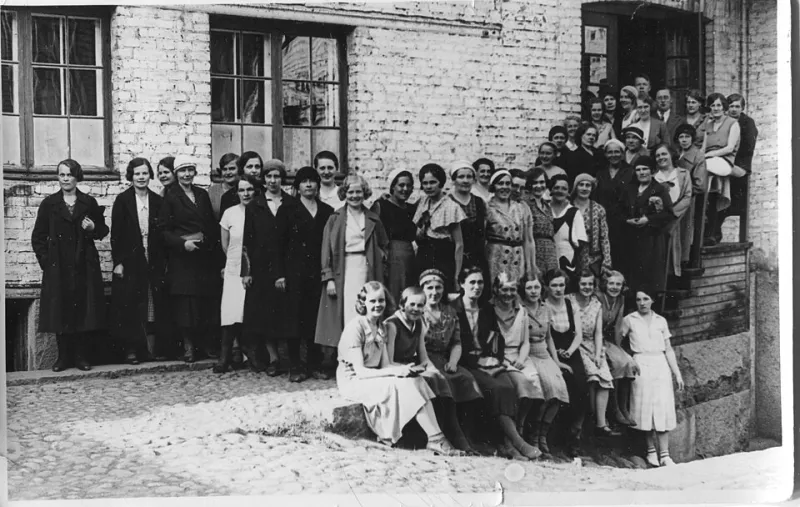
Photo: Unknown authorUnknown author, Public domain, via Wikimedia Commons
In 1950, the average American factory worker walked roughly four to six miles during a single shift, lifted hundreds of pounds of material across the course of a day, and returned home with the particular exhaustion that only comes from having actually used your body. Nobody called it a workout. Nobody tracked their steps. Nobody needed to.
Today, that same distance — four to six miles — is a respectable goal on a fitness app. People carve out time in their calendars to achieve it. They buy shoes engineered specifically for the task. And then they drive home from the gym and sit down for the rest of the evening.
The irony is almost too clean to be real. But it's not irony — it's economics.
When the Body Was the Machine
For the first half of the 20th century, physical exertion wasn't a lifestyle choice in America — it was a job requirement for a huge portion of the workforce. Farmers, miners, steelworkers, longshoremen, construction crews, warehouse workers, domestic laborers — tens of millions of Americans spent their working hours doing things that would qualify as vigorous exercise by any modern measure.
Farm work in particular was relentless. Plowing, planting, harvesting, hauling — the physical demands of agricultural labor shifted with the seasons but never really let up. A farmer in rural Iowa in 1940 didn't need a gym because the farm was the gym, open seven days a week, no membership required.
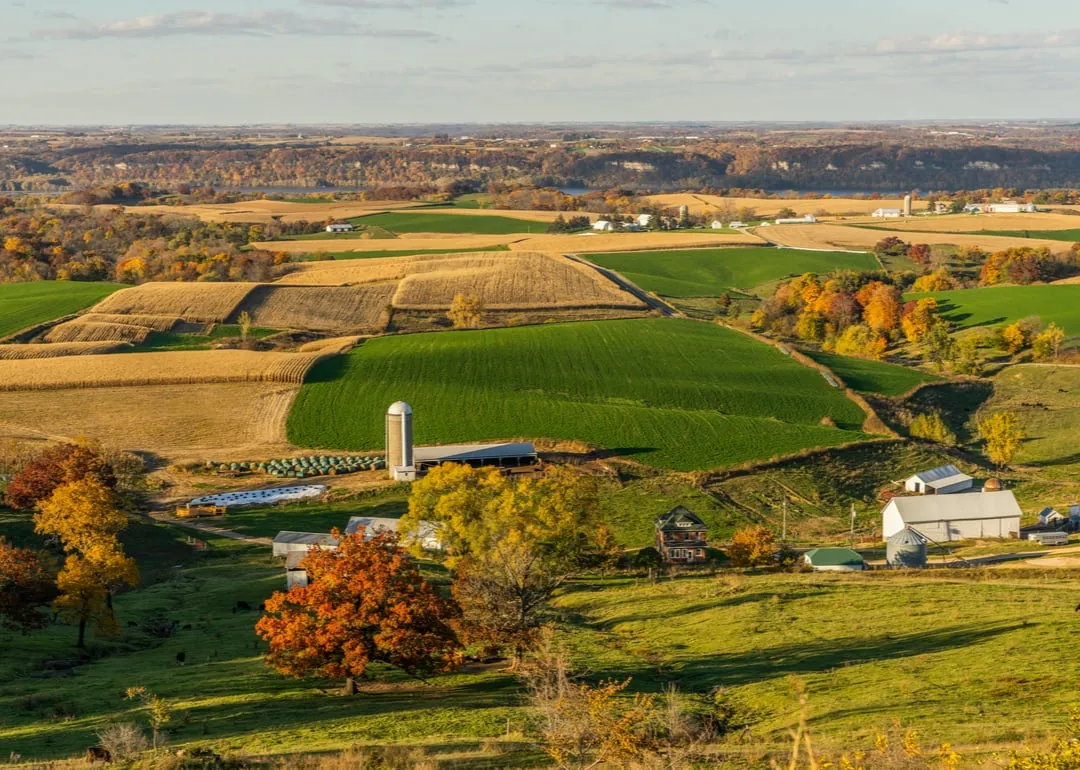 Photo: rural Iowa, via static.stacker.com
Even urban work was far more physical than its modern equivalent. Grocery delivery meant carrying crates. Mail delivery meant walking miles of city blocks. Restaurant work meant hauling, lifting, and standing for eight or ten hours straight. The sedentary office job existed, but it was the exception rather than the norm.
The Shift That Changed Everything
After World War II, the American economy began its long pivot toward services and desk-based work. Manufacturing automation reduced the physical demands of factory jobs. The growth of corporate offices, insurance companies, banks, and government agencies created entire new categories of employment where the most strenuous activity was reaching for a phone.
By the 1970s, a significant portion of the American workforce was spending the majority of their working hours sitting down. By the 1990s, the computer revolution accelerated that shift dramatically. By the 2010s, remote work and knowledge economy jobs had pushed it further still — to the point where some people now go entire workdays without leaving a chair except to use the bathroom.
The human body, which evolved over hundreds of thousands of years to move more or less constantly, suddenly found itself parked in front of a screen for eight hours a day. And the consequences — rising obesity rates, cardiovascular disease, chronic back pain, metabolic disorders — began accumulating in the public health data with uncomfortable clarity.
The Industry That Movement Built
Nature abhors a vacuum, and so does the American economy. As physical labor disappeared from daily life, an entire industry emerged to sell movement back to the people who no longer got it for free.
The modern fitness industry in the United States generates over $35 billion annually. There are roughly 40,000 health clubs and gyms operating across the country. Peloton, CrossFit, Orange Theory, SoulCycle, ClassPass — the branding changes, the concept doesn't. You pay money, you go somewhere, you move your body in structured ways for a defined period of time, and then you go back to the rest of your life.
This is, if you think about it for a moment, genuinely strange. Americans are spending significant sums of money to do — in climate-controlled rooms, with specialized equipment and professional instruction — a version of what their grandparents did involuntarily before breakfast.
The Gym Didn't Always Look Like This
Early American fitness culture, when it existed at all, was a pretty different creature from the modern gym experience. The YMCA, founded in the mid-1800s, offered physical activity as part of a broader program of community and moral development. Physical fitness in the early 20th century was often framed in terms of military readiness or civic duty rather than personal wellness.
The commercial gym as we know it — the mirrored walls, the cardio equipment, the free weight section, the monthly contract — is largely a product of the 1970s and 1980s. Gold's Gym opened in Venice, California in 1965. Nautilus machines arrived in the early 1970s. The aerobics craze of the 1980s turned fitness into a mass-market consumer product for the first time.
 Photo: Venice, California, via images.squarespace-cdn.com
What drove that explosion wasn't a sudden cultural obsession with health. It was the fact that by the 1980s, a large enough portion of the American middle class had desk jobs that the deficit of daily movement had become physically noticeable. The gym wasn't a luxury — it was a corrective.
Movement as a Luxury Good
There's a class dimension to all of this that's worth sitting with. When physical movement was embedded in labor, it was most available to the people who needed it least — or rather, the people who had no choice but to have it. The wealthy sat at desks and rode in carriages. The working class moved their bodies all day long.
Now the dynamic has partially inverted. Gym memberships, fitness classes, personal trainers, and the time to use them are concentrated among higher-income Americans. The people most likely to work physically demanding jobs today — warehouse workers, delivery drivers, agricultural laborers — often don't have the time or resources to supplement that labor with structured exercise. Meanwhile, knowledge workers with sedentary jobs and disposable income are the ones with Peloton bikes in their spare bedrooms.
The body still needs movement. That hasn't changed. What's changed is who has to pay to get it, and how much.
What the Treadmill Can't Replicate
There's one thing the gym gives you that the old model of physical labor never really offered: choice. You can stop when you want. You can pick the music. You can decide which muscles to train and which to rest. The movement is voluntary, which means it's also, in some complicated psychological way, an act of self-determination.
What the gym can't give you is the satisfaction of having moved something that needed to be moved. The particular tiredness that comes from building or harvesting or hauling something real. There's a reason so many Americans — including plenty who have gym memberships — also take up gardening or woodworking or trail hiking. The body seems to know the difference between movement that produces something and movement that just burns calories.
The treadmill goes nowhere on purpose. That's both its greatest convenience and its most honest limitation.