Graded on Kindness: The Era When Your Report Card Measured the Kind of Person You Were Becoming
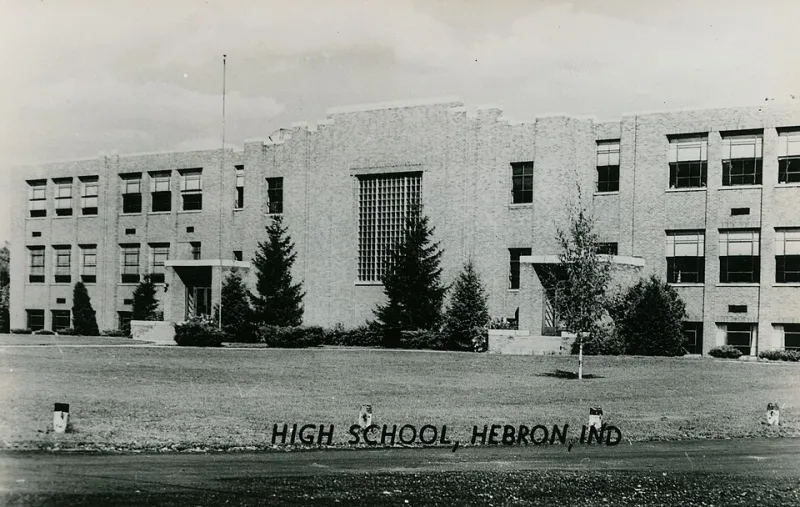
Photo: Steve Shook from Moscow, Idaho, USA, CC BY 2.0, via Wikimedia Commons
Imagine opening your child's report card and finding, alongside the usual math and reading scores, a formal grade for Respects Others, Controls Emotions Appropriately, and Demonstrates Honest Behavior. Today, that might feel invasive, vague, or even a little unsettling. But for a wide swath of twentieth-century American education, it was completely standard — and most parents expected it.
For much of the century between roughly 1900 and the 1980s, American elementary schools operated on a foundational belief that their job wasn't just to fill young minds with academic content. It was to shape character. To produce citizens. To send children home not just smarter than they arrived, but measurably better — and to formally document the progress.
That belief is mostly gone from mainstream American schooling now. What replaced it is a story worth understanding.
What Those Old Report Cards Actually Said
Pull up any collection of mid-century American report cards and you'll notice something immediately: the non-academic section is often as long as the academic one, sometimes longer. Categories varied by school district and era, but common entries included Works Well With Others, Shows Courtesy to Teachers and Classmates, Follows Directions Promptly, Takes Responsibility for Actions, Demonstrates Good Citizenship, and Controls Temper and Emotions.
These weren't afterthoughts tucked at the bottom of the page. They were presented as equal in importance to spelling and arithmetic. Some districts used letter grades. Others used systems like Satisfactory, Needs Improvement, or Outstanding. A few used narrative comments that read almost like character references — a teacher explaining, in careful handwriting, that a child showed genuine kindness to a struggling classmate, or that a student needed to work on patience before speaking.
The underlying logic was explicit: schools were partners with families in the project of moral formation. Academic skill without character was considered an incomplete education, and most American parents of that era would have agreed without hesitation.
Where the Idea Came From
The character-grading tradition didn't emerge from nowhere. It grew out of a progressive education movement in the early twentieth century that believed schools had a civic responsibility extending well beyond reading and writing. Figures like John Dewey argued that democratic society depended on citizens who had internalized values like cooperation, self-discipline, and respect for others — and that those values had to be taught deliberately, not assumed.
 Photo: John Dewey, via enterapiaonline.com
This overlapped with a religious and moral framework that dominated American public culture through mid-century. Schools, churches, and families were understood to be working in the same direction, instilling a common set of virtues that would produce functional, ethical adults. Character education wasn't controversial because the underlying values weren't controversial — or at least, weren't openly contested.
Teachers of that era were also given something modern educators rarely have: time and latitude to know their students as whole people. In a classroom of 25 or 30 children you saw every day for a full academic year, you learned who was generous, who was impulsive, who was honest under pressure, who needed encouragement to speak up, and who needed help learning to listen. Grading character wasn't abstract. It was observational.
The Slow Fade: What Pushed Character Off the Card
The decline of formal character grading didn't happen overnight, and no single policy decision killed it. It eroded across several decades under pressure from multiple directions.
The first pressure was standardization. As American education became increasingly focused on measurable, comparable outcomes — driven partly by Cold War anxieties about academic competitiveness — the things that couldn't be easily quantified began to lose their formal place. Character traits were hard to grade consistently across classrooms and districts. What one teacher called good citizenship another might assess differently. In a system moving toward standardized benchmarks, that inconsistency became uncomfortable.
The second pressure was legal and cultural. By the 1970s and 1980s, questions arose about whether schools had the authority to formally evaluate children's personalities and moral behavior. Parents pushed back in some districts. Civil liberties concerns emerged about what it meant to put a grade on a child's character in a permanent record. The liability of making a written judgment about whether a ten-year-old was honest or self-controlled started to feel significant.
The third — and probably decisive — pressure was the rise of standardized testing as the dominant metric of educational quality. The No Child Left Behind Act of 2001 essentially completed the transformation, tying school funding to reading and math scores in ways that crowded nearly everything else out of the instructional day. If it wasn't on the test, it was hard to justify the time.
 Photo: No Child Left Behind Act, via epe.brightspotcdn.com
What Replaced It — and What Didn't
Character education didn't completely disappear. It went underground, or got rebranded. Social-emotional learning — SEL — emerged in the 1990s as a framework for teaching self-awareness, empathy, and interpersonal skills. Many schools adopted it. Programs like PBIS (Positive Behavioral Interventions and Supports) tried to address behavior systematically. Anti-bullying curricula proliferated.
But none of these quite replicated what the old report card did: make character formally visible, documented, and consequential. SEL programs are often supplemental — an add-on to the academic schedule, not woven into how a student's overall progress is evaluated. A child can ace every standardized test in the state and receive no formal feedback whatsoever about whether they're becoming a considerate, honest, or self-aware person.
The irony is that employers, colleges, and researchers consistently identify character traits — things like persistence, empathy, self-regulation, and integrity — as among the most important predictors of success in adult life. The traits that got graded on a 1955 report card turn out to matter enormously. We just stopped measuring them.
A Grade Worth Reconsidering
There's no straightforward path back to the era of character report cards. The cultural consensus that made them possible — a shared set of values, a less litigious environment, a different relationship between schools and families — isn't simply waiting to be restored.
But it's worth sitting with what the shift cost us. A generation of American students passed through schools that could tell them precisely how they performed on a standardized reading assessment and say almost nothing formal about whether they were kind, honest, or capable of handling frustration. Those feel like different kinds of education. And only one of them was ever really about becoming a person.
Somewhere, a grandmother has a report card from 1961 that says her mother "shows genuine care for classmates and sets a fine example of courtesy." It's the line she's most proud of. There's no equivalent box on any report card being sent home today.