Remember When Filling Up the Tank Felt Like Nothing? The Strange Psychology of Gas Prices in America
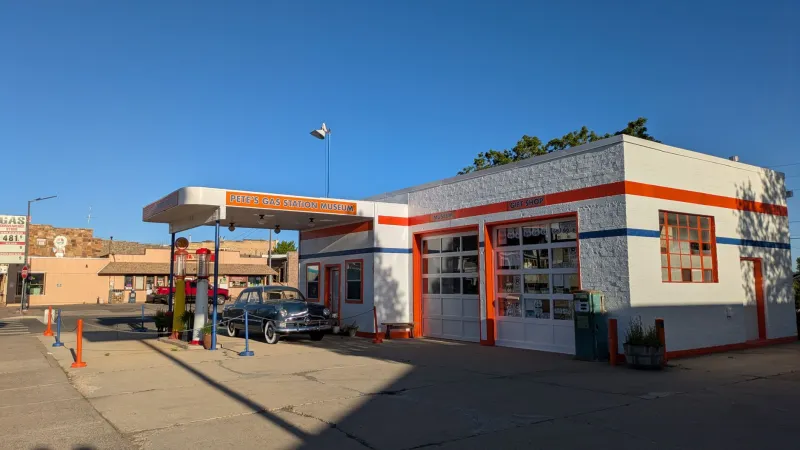
There's a ritual that plays out at gas stations across America every single day. Someone pulls up, glances at the price per gallon, sighs — maybe mutters something under their breath — and then fills up anyway. The grumbling is almost ceremonial at this point. Because no matter what the number says, most of us are getting back in that car.
That relationship between Americans and the pump is one of the most quietly fascinating economic stories of the last seventy years. It's not just about how prices changed. It's about how we changed — how our expectations shifted, how our sense of what's reasonable got slowly recalibrated, and how the car became so central to American life that the cost of fueling it almost stopped mattering.
The Postwar Price That Seems Impossible Now
In the early 1950s, gasoline in the United States cost around 27 cents a gallon. That's not a typo. A full tank in a typical car of the era might run you a dollar and a half. For a country that had just survived a world war and was riding a wave of economic optimism, cheap gas wasn't a perk — it was practically a birthright.
Adjusting for inflation, that 1950s price works out to roughly $3.00 to $3.50 in today's dollars, which is actually not far off from what we pay now in many parts of the country. But here's what that comparison misses entirely: the proportion of income that went toward driving was dramatically different. A factory worker in 1955 earning a modest wage could fill up his car, drive to work all week, and take the family for a Sunday drive without it registering as a budget line item.
Gas was just... there. Cheap, abundant, and easy.
The Shock That Changed Everything
For most Americans, the first genuine confrontation with fuel costs came in October 1973, when the Arab oil embargo sent prices through the roof almost overnight. Gas that had been selling for 38 cents a gallon in the summer hit well over 55 cents by early 1974 — and suddenly there were lines around the block at stations, odd-even rationing based on license plate numbers, and a genuine national conversation about something that had never really needed one before.
For the first time in living memory, Americans felt the vulnerability of their dependence on cheap oil. The psychological impact was enormous. People who had never thought twice about a Sunday drive were suddenly calculating whether the trip was worth it.
By 1981, the average price had climbed past $1.35 a gallon — a figure that sounds almost quaint today but caused real economic pain at the time. Fuel-efficient cars became desirable almost overnight. The gas-guzzling American muscle car era didn't die on its own; the pump killed it.
Crossing the Dollar Threshold — and Every One After It
There's a well-documented phenomenon in consumer psychology where a price crossing a round number feels like a psychological event. The first time the national average hit $1.00 a gallon in the early 1980s, it made headlines. When it crossed $2.00 in the mid-2000s, it felt alarming. When it breached $3.00, politicians gave speeches about it.
And then, somewhere along the way, something interesting happened. We stopped being shocked.
The summer of 2008 brought the national average to over $4.00 a gallon for the first time, peaking near $4.11. There was real anger — bumper stickers, congressional hearings, a presidential campaign partly shaped by the issue. But within a year, prices had dropped back, and the memory faded.
When prices pushed past $5.00 nationally in the summer of 2022, the reaction was intense but brief. Within months, the news cycle had moved on. Drivers had absorbed it. Not because it didn't hurt — it did, especially for lower-income households who spend a larger share of earnings on transportation — but because the American lifestyle had been built around the assumption of the car, and that assumption wasn't going anywhere.
The Car Isn't Optional Anymore
That's the key thing that gets lost in straightforward price comparisons. In 1955, a family in a mid-sized American city might have had real alternatives — streetcars, walkable neighborhoods, a corner store within reasonable distance. The car was a joy, a symbol of freedom and prosperity, but not always a strict necessity.
Decades of suburban development, highway construction, and the slow death of public transit in most American cities changed that calculation permanently. By the 1990s, and certainly by today, driving isn't a lifestyle choice for the vast majority of Americans. It's how you get to work, take your kids to school, buy groceries, and see a doctor. The car stopped being optional long before the price stopped feeling outrageous.
That captive relationship is precisely why the psychology shifted. When you have no alternative, you stop comparing the price to what you wish it were and start comparing it to what it was last week.
What We Actually Stopped Noticing
Here's the figure that tends to land hardest: the average American household now spends somewhere between $3,000 and $5,000 per year on gasoline alone, depending on location and driving habits. That's a car payment. That's a significant chunk of rent in some markets. For lower-income families, it can represent 8 to 10 percent of total household income.
And yet most of us couldn't tell you, off the top of our heads, exactly what we spent on gas last month. We notice the sign when we pull in. We groan. We swipe the card. And then we drive away.
The real story of American gas prices isn't a story about oil markets or geopolitics or inflation, though it's all of those things too. It's a story about how a country can build itself so thoroughly around a single resource that the cost of that resource becomes something closer to a tax than a choice — something you pay because the alternative is not participating in ordinary life.
The driver in 1955 who paid 27 cents a gallon wasn't just paying less. He was paying for something that still felt like a luxury. The driver today paying $4.00 a gallon is paying for something that feels like oxygen.
That's not progress, exactly. But it's America.