Take Two and Don't Ask Questions: When Your Doctor Knew Best and That Was the End of It
Pull an old prescription bottle out of a medicine cabinet from the 1950s — if you could find one — and here's what you'd likely read on the label: Take as directed. Dr. Hartwell. That was it. No dosage breakdown. No list of interactions. Certainly no paragraph warning you that this medication might cause dizziness, dry mouth, suicidal thoughts, or an inexplicable urge to avoid operating heavy machinery.
Just a name, a number of pills, and the quiet implication that the man in the white coat had already thought of everything you needed to know.
For most of the twentieth century, that was enough.
The Doctor as Oracle
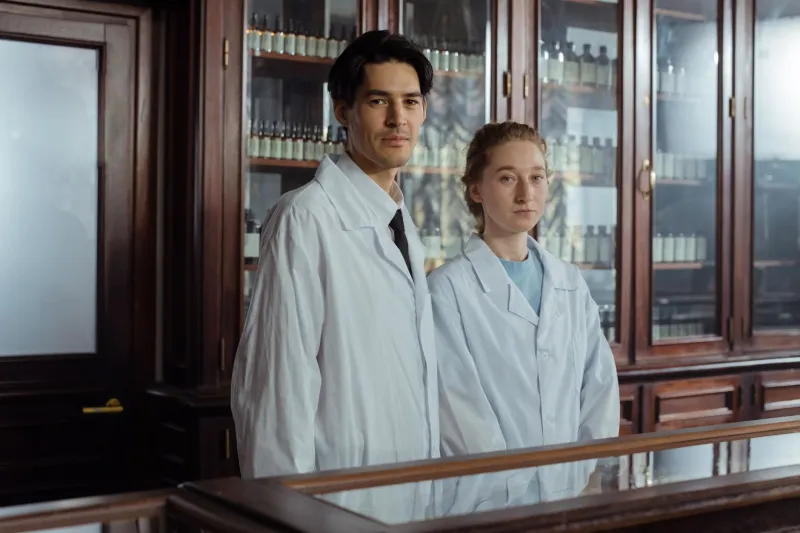
Medicine in mid-century America operated on a foundation of authority. Physicians weren't just healthcare providers — they were community figures, often the most educated person in a small town, someone your family had known for decades. You didn't question them any more than you'd question a judge or a priest. You walked into the office, described your symptoms, received a prescription, and walked out with the understanding that the details were none of your business.
This wasn't negligence. It was a different kind of care — one built on relationship and trust rather than documentation and disclosure. Patients weren't kept in the dark out of malice. The prevailing belief was that too much information would confuse or frighten people, potentially leading them to stop taking necessary medication. Doctors called it therapeutic privilege — the right to withhold information they believed might harm the patient's wellbeing.
And honestly? For a lot of people, it worked. You took the pills, you got better, and you went back to your life.
The Labels Start Talking
Things began to shift in the 1960s. The thalidomide disaster — a sedative prescribed to pregnant women in Europe that caused severe birth defects — sent shockwaves through the American medical establishment. Congress passed the Kefauver-Harris Amendment in 1962, requiring drug manufacturers to prove both safety and effectiveness before approval. It was the first major crack in the wall of pharmaceutical opacity.
Over the following decades, the wall came down piece by piece. The FDA began requiring patient package inserts. Malpractice litigation reshaped how physicians communicated risk. The concept of informed consent — the legal and ethical obligation to explain what a treatment involves before a patient agrees to it — moved from fringe idea to standard practice.
By the 1980s, the prescription bottle had started talking. By the 1990s, it wouldn't shut up.
Information Overload, American Style
Walk into any pharmacy today and the experience is almost the opposite of what it once was. You leave with a stapled packet of papers dense enough to double as a short novel. The label itself lists the drug name, dosage, frequency, prescribing doctor, dispensing pharmacist, refill count, expiration date, and a cascade of warnings in type so small it requires reading glasses most people don't have with them.
And that's before you get home and Google it.
WebMD launched in 1996. Drugs.com followed. Then came patient forums, Reddit threads, YouTube explainers, and eventually AI chatbots willing to tell you at 2 a.m. whether your antibiotic might interact with your blood pressure medication. Americans now have access to more pharmaceutical information than most doctors possessed fifty years ago — and we use it, sometimes wisely and sometimes in ways that send us spiraling into health anxiety at midnight.
A 2022 survey found that roughly 77 percent of Americans research their medications online before or after filling a prescription. That number would have been incomprehensible to a physician in 1955. Unthinkable, even.
What We Gained — and What Got Complicated
The transparency revolution has saved lives. There's no serious argument against that. Patients who understand their medications are more likely to take them correctly, more likely to recognize dangerous side effects early, and more likely to catch prescribing errors that do happen — because doctors, despite their training, are human.
Informed consent has also redistributed power in a relationship that was historically one-sided. The patient today is a participant, not a subject. That shift in agency is meaningful and real.
But something more complicated has happened alongside the progress. The doctor-patient relationship — once built on unhurried conversation and personal history — has been partially replaced by a transactional dynamic shaped by short appointment windows, liability concerns, and patients who arrive already convinced they know what's wrong. When a physician recommends a medication and the patient spends the next hour reading horror stories on a forum, trust erodes in both directions.
There's also the paradox of the warning label itself. When every medication comes with a list of forty potential side effects — including ones that affect less than one percent of users — patients sometimes stop taking essential drugs out of fear. Or they tune out the warnings entirely because there are simply too many of them. The signal gets lost in the noise.
The Space Between Trust and Knowledge
What's interesting, looking back, isn't that one era was better than the other. It's that they reflect entirely different assumptions about the relationship between ordinary people and expertise.
The old model said: We know things you don't, and that's okay. The new model says: Here is everything we know — now you decide. Both approaches carry real costs. The first asks for a level of trust that was sometimes abused. The second asks for a level of health literacy that most Americans don't have and were never taught.
Somewhere between the prescription bottle that told you nothing and the internet that tells you everything — often at the same time — there's probably a better version of this conversation waiting to happen.
We just haven't quite found it yet.