The Clock You Could Never Quite Punch Out On: How Work Quietly Moved Into Every Room of Your House
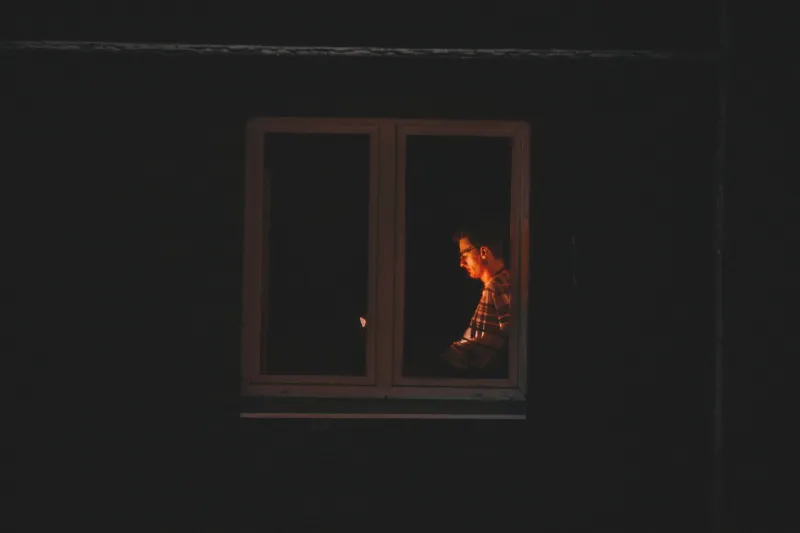
There's a moment that millions of American workers once shared at the end of every workday, and it's harder to explain to someone under thirty than you might expect.
You finished what you were doing. You put on your coat. You walked out of the building. And then — genuinely, completely — you were done. Whatever was sitting on your desk would still be sitting there in the morning. The phone at home wasn't a work phone. Nobody expected to reach you. The boundary between your professional life and your personal life was physical, enforced by geography and the simple fact that you had walked out a door.
That moment still exists for some people. But for a large and growing portion of the American workforce, it has become something closer to a myth.
When Five O'Clock Meant Something
For most of the twentieth century, the structure of work was defined by clear limits. Factory shifts had start times and end times enforced by physical clocks and union agreements. Office workers kept regular hours and left their work behind when they left the building — not because they were lazy, but because there was no mechanism to do otherwise. The technology didn't exist to follow you home.
The pager was the first hint of what was coming. Introduced in the 1950s and widely adopted by the 1980s, it was initially limited to on-call professionals — doctors, emergency responders, executives whose decisions genuinely couldn't wait. For most workers, the pager remained someone else's problem.
Then came the mobile phone. Then email. Then the smartphone. And with each successive technology, the boundary moved a little further into territory that had once belonged entirely to the individual.
By the time most Americans understood what was happening, work had already unpacked its bags and made itself at home.
The Promise That Came With the Technology
It's worth remembering that each of these tools arrived with a pitch, and the pitch was usually about freedom.
The laptop meant you could work from anywhere — the coffee shop, the airport, the beach. The smartphone meant you'd never miss an important message. Email meant you could respond on your own schedule rather than playing phone tag. Remote work, accelerated by the COVID-19 pandemic, promised the ultimate liberation: no commute, flexible hours, your own kitchen, your own music.
And in fairness, some of that was real. Flexibility has genuinely improved the lives of parents managing childcare, workers with disabilities navigating traditional office environments, and people living far from major employment centers who previously had limited options.
But flexibility turned out to have a shadow side that the promotional materials didn't mention.
The Invisible Expansion of the Workday
Researchers have spent the past two decades studying what actually happened to working hours when digital tools removed the natural endpoints of the workday. The findings are fairly consistent: work expanded to fill the available space.
A study published in the Harvard Business Review found that remote workers during the pandemic logged an average of 48.5 minutes more per day than their in-office counterparts had before the shift. That's roughly four extra hours a week — without a corresponding increase in pay, and without most workers fully recognizing it was happening.
This is the insidious quality of the always-on culture. It doesn't announce itself. It arrives in small increments — a quick email before bed, a Slack message answered during dinner, a Sunday afternoon spent clearing the inbox so Monday feels less overwhelming. Each individual moment feels minor. The aggregate is a significant transfer of personal time into professional time, and it happened with almost no negotiation.
What Clocking Out Actually Did for People
The psychological value of a genuine boundary between work and home isn't fully appreciated until it's gone.
When work stayed at work, the transition home served as a kind of daily reset. The commute — as tedious as it could be — created a buffer zone, a period of decompression between professional identity and personal life. You got home, changed your clothes, had dinner, and inhabited a different version of yourself for a few hours. Sleep wasn't contaminated by half-finished tasks and unread notifications. Weekends were weekends.
This isn't just nostalgia. Research on cognitive recovery suggests that the ability to genuinely detach from work — not just physically leave the building but mentally disengage — is strongly associated with lower burnout rates, better sleep quality, and higher long-term productivity. The brain needs actual rest, and rest requires the genuine belief that nothing is urgently waiting.
When that belief becomes impossible to maintain — when the phone is always within reach and the expectation of availability is always present — rest stops being rest.
The New Social Contract Nobody Signed
What makes this shift particularly interesting is how thoroughly it was normalized without ever being formally agreed to.
There was no announcement, no renegotiation of employment terms, no national conversation about whether workers should be reachable at 9 p.m. on a Tuesday. The tools arrived, the culture adapted around them, and the expectation of constant availability became embedded in professional norms so gradually that resisting it started to feel like a personal failing rather than a reasonable boundary.
In some industries, the pressure is explicit. In others, it's ambient — nobody says you have to respond to that Sunday email, but everyone knows what happens to the people who don't.
What We Traded, and What We Might Get Back
It would be too simple to say the old way was better and leave it there. The rigid separation of work and home life came with its own costs — inflexibility, wasted commute hours, the inability to attend a child's school event or manage a personal appointment without taking a full day off.
But the pendulum has swung far enough in one direction that the costs are becoming visible. Burnout rates in the American workforce are at historic highs. Work-life balance has become one of the top factors workers cite when leaving jobs — more important than salary in some surveys. The generation entering the workforce now is actively seeking employers who can define, and actually enforce, where work ends.
That's not laziness. It's a recognition that somewhere between the rigid punch-clock of the mid-century office and the always-on blur of the modern workday, something worth protecting got lost.
The door that used to mean something when you walked through it. The evening that actually belonged to you. The Sunday that work hadn't learned your address yet.
Those things mattered. And enough people are starting to remember that they did.