The Diner That Only Locals Knew About: How Chain Restaurants Quietly Ate America's Food Identity
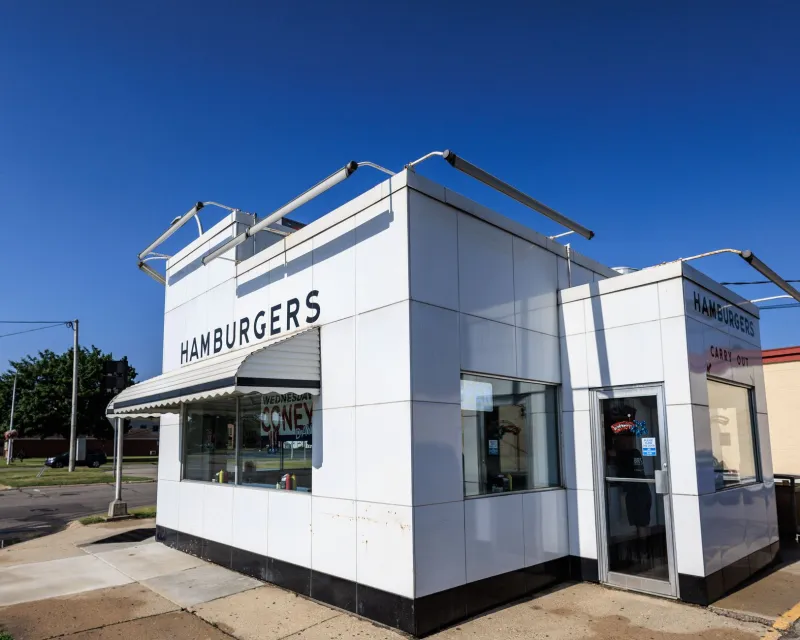
There used to be a barbecue place outside Memphis — the kind with no sign worth mentioning, a screen door that slapped behind you, and a guy named Earl who'd been running the pit since before you were born. You found it because someone's uncle mentioned it, or because you got lost and followed the smoke. The pulled pork was transcendent in a way that was completely non-transferable. Earl's sauce was Earl's sauce. You couldn't get it in Nashville. You couldn't get it anywhere else on earth.
Earl's place is probably gone now. In its spot, there's a decent chance you'll find a Chili's.
The Geography of Flavor
For most of the twentieth century, American food was genuinely, stubbornly regional. The country was too big and too diverse for any single culinary identity to take over, and the result was a patchwork of local food cultures that reflected the specific history of each place — who had immigrated there, what grew in the soil, what the working-class community needed at lunchtime for under a dollar.
In Baltimore, you ate crab cakes from a counter stool. In Cincinnati, chili came over spaghetti and that was not up for debate. In the Central Valley of California, taco trucks run by families who'd been in the region for decades served food that bore almost no resemblance to what a Taco Bell would eventually call a taco. In New York's outer boroughs, you could walk three blocks and pass a Puerto Rican bakery, a Cantonese roast duck shop, and a Polish deli that had been operating since the 1940s.
This wasn't quaint. It was the actual food culture of a nation built by waves of immigration, each group feeding themselves and eventually feeding their neighbors. The restaurant was an extension of the community. The menu was a document of who lived there.
The Chain Arrives
The national restaurant chain wasn't invented overnight. McDonald's began its franchise expansion in the late 1950s. Howard Johnson's had been dotting American highways since the 1930s. But the real acceleration happened in the 1970s and 1980s, when the combination of interstate highway standardization, suburban sprawl, and aggressive franchise development created conditions that chains were uniquely positioned to exploit.
Chains offered something that independent restaurants genuinely couldn't match: consistency. You knew exactly what you were getting at a Denny's in Boise because it was identical to the Denny's in Baton Rouge. For a country that was increasingly mobile — families moving for work, road trips becoming a leisure staple — that predictability had real value. Nobody wanted to risk a bad meal on a Tuesday night in an unfamiliar town.
But the trade-off was enormous, and it played out slowly enough that most people didn't notice it happening.
What Standardization Actually Costs
By the 1990s, the restaurant landscape along American commercial strips had begun to homogenize in a way that would have been unrecognizable to someone from 1960. The same fifteen or twenty brand names repeated themselves across thousands of miles of highway. The menus were engineered in corporate test kitchens in suburban Dallas or Columbus, optimized for consistency and scalability rather than for any particular culinary tradition.
The independent restaurants that had defined American food culture didn't disappear entirely — but they faced pressures that previous generations hadn't encountered. Real estate costs rose. Health codes, while genuinely necessary, created compliance burdens that large chains could absorb easily but that a family-run operation on thin margins often couldn't. The children of immigrant restaurant owners had more options than their parents had, and many of them took those options rather than inherit a business that required sixty-hour weeks and constant uncertainty.
The result, by the 2000s and 2010s, was a dining landscape that was safer, cleaner, and more predictable — and also flatter, less surprising, and significantly less interesting.
The Traveler Who Used to Eat Like a Local
There's a specific kind of travel experience that's become almost impossible to replicate: arriving in an unfamiliar American city and eating your way into understanding it. Food was once a reliable portal into a place's identity. The specific ingredients, the preparation methods, the price points, the clientele — all of it told you something real about where you were.
That experience hasn't completely vanished. Major cities still have food cultures worth exploring. New York, Los Angeles, Chicago, Houston — places with large, established immigrant communities and enough density to support independent restaurants — still offer something close to the old adventure. But the further you get from urban cores, the more the landscape flattens. Drive through mid-sized American cities today and the commercial strips are largely interchangeable. The chain restaurants are the same. The food tastes the same. The experience of eating tells you almost nothing about where you are.
For travelers, this is a genuine loss. For the communities themselves, it's something deeper — a kind of culinary amnesia, a slow erasure of the food history that once made each place specific and irreplaceable.
Something's Coming Back, Slowly
There are signs of recovery. The farm-to-table movement, whatever its occasional pretensions, renewed interest in local sourcing and regional ingredients. Food media — from the late Anthony Bourdain's work to the explosion of YouTube food channels — spent the last two decades actively celebrating the kind of hole-in-the-wall, family-run, historically-rooted restaurant that the chain era nearly buried.
Younger diners, particularly in cities, have shown a genuine appetite for authenticity. The taqueria run by a family from Oaxaca. The Vietnamese sandwich shop that's been in the same strip mall since 1989. The Haitian bakery that opened last year in a neighborhood that didn't have one before.
But Earl's barbecue is still gone. The sauce is still gone with it. And no amount of Yelp reviews or food tourism can fully reconstruct what happens when a culinary tradition disappears before anyone thought to write it down.
Some things, once standardized away, don't come back. The screen door still slaps. But it's a Chili's now.