The Booklet That Came in the Box: When Buying Something Meant Actually Learning How It Worked
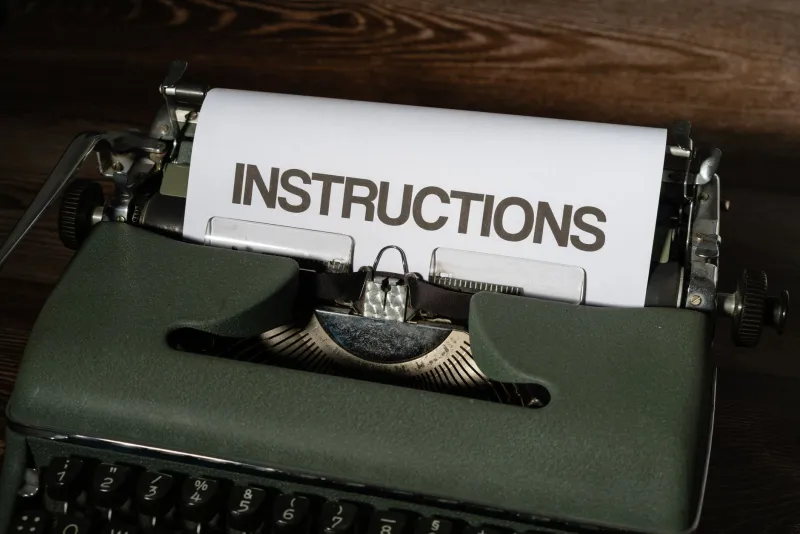
There was a specific weight to it. You'd pull open the box, dig past the styrofoam packing material, and find it at the bottom — a proper booklet, sometimes staple-bound, sometimes a small paperback, occasionally a spiral-bound document that felt almost academic. The instruction manual. And the unspoken message it carried was clear: this product is worth understanding, and we believe you're capable of understanding it.
For most of the twentieth century, that manual wasn't an afterthought. It was part of the product.
The Golden Age of Telling You Exactly What to Do
Pick almost any consumer product from the 1950s through the 1990s and you'll find documentation that takes your breath away — not because of its elegance, but because of its sheer commitment to completeness. A mid-century kitchen mixer might come with a sixty-page guide covering not just operation and cleaning, but also recipes, suggested uses, and notes on motor maintenance. A home reel-to-reel tape recorder from the early 1970s could arrive with a manual that walked you through the physics of magnetic recording before it even got to the setup instructions.
Sears was particularly legendary for this. Their appliances — washers, dryers, refrigerators, power tools — came with documentation that assumed the buyer might want to understand, at least in broad terms, why the machine worked the way it did. Wiring diagrams were included not because the average homeowner was expected to rewire anything, but because the philosophy of the era held that ownership implied a certain level of knowledge. You bought the thing; you should understand the thing.
Children's toys were no different. The original Erector Set, which peaked in popularity in the mid-twentieth century, came with manuals illustrating dozens of different construction projects in careful detail. The instructions for early model train sets could run to thirty pages, covering not just assembly but track planning, electrical concepts, and landscape design. The implicit message to a ten-year-old was significant: you can figure this out, and here is everything you need to do it.
Paper Was Cheap. Assumptions Were Generous.
Part of what made those manuals possible was economic. Printing costs, relative to the price of the product, were low enough that a comprehensive booklet was a reasonable investment. But the deeper explanation is cultural. American consumer culture in the postwar decades was built on a particular vision of the capable, self-sufficient household. The man of the house was supposed to know how his furnace worked. The woman of the house was supposed to understand her appliances well enough to maintain them. These were not fringe expectations — they were encoded into the products themselves.
Home improvement manuals from this era are almost comically ambitious by modern standards. A 1965 guide to home electrical work published by a major hardware retailer walked readers through installing outlets, running new circuits, and understanding load calculations — tasks that today would send most people straight to a licensed contractor and a building permit application. The assumption wasn't recklessness; it was confidence in the reader's ability to learn.
That confidence extended to complexity. Early personal computers — the Apple II, the Commodore 64, the original IBM PC — shipped with manuals that were essentially textbooks. The Apple II's reference manual explained the machine's architecture in enough detail that a motivated user could write programs to take advantage of specific hardware features. Nobody expected every buyer to read all of it. But the manual existed as a complete resource, a gesture of respect toward the user's potential curiosity.
The Slow Disappearance
The decline of the instruction manual happened in stages. The first wave came in the 1990s, when manufacturers began migrating documentation to CD-ROMs included in the box. Technically, the information was still there — often more of it than ever, with searchable text and embedded video clips. But something was already shifting. The manual was no longer a physical object you could flip through in bed or mark up with a pen. It was a file on a disc that most people never opened.
The internet accelerated the trend dramatically. By the mid-2000s, it was increasingly common for products to ship with a single folded sheet — a quick-start guide — and a note directing users to the manufacturer's website for full documentation. This was presented as an environmental improvement, and in a narrow sense it was. Less paper, less waste. But it also transferred the burden of access entirely to the consumer. The information existed somewhere online, in theory, if you could find it, if the website was still maintained, if the product was recent enough to have decent support.
Today, the QR code has become the default gesture toward documentation. Scan this, watch a video, figure it out. Unboxing videos on YouTube — a genre that now generates billions of views annually — have become, in a real sense, a crowdsourced replacement for the instruction manual. Strangers on the internet explain how products work because the products themselves no longer come with that explanation.
What We Lost in the Translation
The practical consequences are real. Repair culture has largely collapsed in the United States. When a product breaks, the instinct — and often the only realistic option — is replacement rather than repair. This is partly by design; many modern products are built in ways that make user repair difficult or impossible. But it's also a knowledge problem. When products don't come with documentation explaining how they work, owners have no foundation for understanding what might have gone wrong.
Right-to-repair advocates have been making this argument for years, and it's gaining legislative traction in several states. But the deeper issue isn't just legal access to parts and schematics. It's the cultural assumption that ownership comes with knowledge. That when you buy something, you deserve to understand it — not just how to turn it on, but how it actually functions.
The instruction manual, at its best, embodied that assumption. It said: this is yours now, and here is everything we know about it. Take care of it.
The QR code says something different. It says: the information is out there somewhere. Good luck.
The Quiet Confidence of a Well-Written Manual
There's a reason people collect vintage instruction manuals. Not just as curiosities, though they certainly are that — a 1958 Hoover vacuum manual is a remarkable artifact. People collect them because they represent a particular attitude toward the consumer: respectful, thorough, and fundamentally optimistic about human capability.
We didn't get dumber. The products got more complicated, the margins got tighter, and the assumption shifted from the owner will want to understand this to the owner will figure it out or call support. That's a subtle change in philosophy. But over decades, it adds up to something significant — a quiet erosion of the idea that buying something and understanding something are supposed to go together.