Old Magazines and Strangers: What We Traded Away When Waiting Rooms Got Efficient
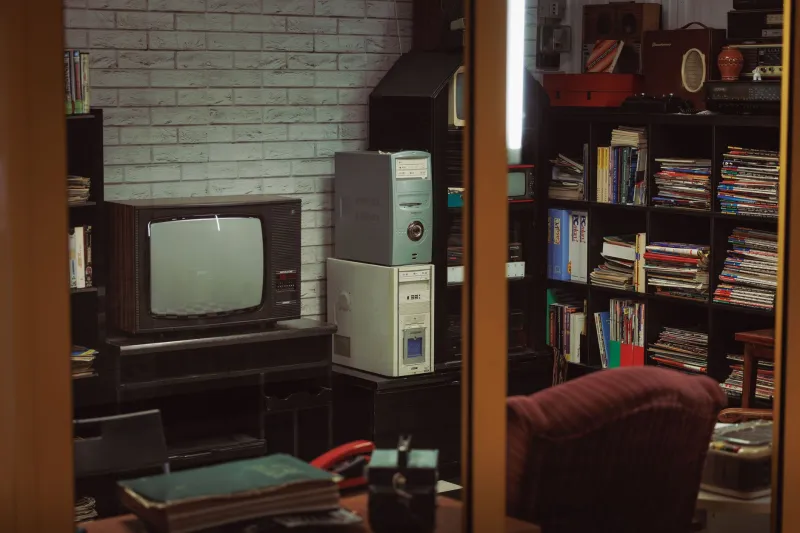
The magazines were always two months old. That was practically a rule. You'd flip past a March cover story in the middle of May, and somehow it still felt like a reasonable way to spend twenty minutes. There was a stack of them — People, Sports Illustrated, maybe a National Geographic that nobody had touched since the Clinton administration — fanned out on a side table like a deck of cards that had lost its purpose.
That was the waiting room. And for most of the twentieth century, it was as American as the doctor himself.
A Room Full of Strangers Going Nowhere Fast
If you grew up before smartphones, you know the particular texture of that experience. You arrived at your appointment, checked in with a receptionist who may or may not have smiled at you, and then you sat. There was no tracking your place in line. No app telling you the doctor was running fourteen minutes behind. You simply waited, alongside a rotating cast of strangers who were all, in their own way, doing the same thing.
And something happened in that shared limbo. People talked. Not always — plenty of waiting rooms had the hushed, reverent quiet of a library — but often enough. An older woman might comment on the weather. A father wrangling a toddler might catch your eye and shrug. Someone's kid would knock over the toy bin in the corner, and half the room would laugh. These were small moments. But they were real ones.
The waiting room was, in a strange way, a leveling experience. The guy in the suit and the woman in paint-splattered jeans were both stuck in the same plastic chairs under the same buzzing lights. Illness, checkups, and the general unpredictability of the human body were great equalizers. You were all just people waiting for your name to be called.
When the Clock Started Moving Faster
The shift didn't happen overnight. Through the 1990s and into the early 2000s, waiting rooms were still very much waiting rooms. Then came the smartphone. Then came patient portals, online scheduling, and eventually the virtual waiting room — that surreal experience of sitting in your car in the parking lot, texting a number to announce your arrival, and being told to come in only when the staff is ready for you.
COVID-19 accelerated all of it dramatically. Practices that had been slowly experimenting with digital check-in and reduced-contact visits were suddenly forced to redesign the entire patient experience from scratch. Waiting rooms emptied out. Chairs were spaced six feet apart or removed entirely. Telehealth exploded. And when the dust settled, a lot of those changes stuck — not because anyone was nostalgic for crowded waiting rooms, but because the convenience was genuinely hard to argue with.
Today, plenty of medical offices will text you a link to complete your paperwork before you even leave the house. You check in digitally, get a notification when the exam room is ready, and walk straight past what used to be a full waiting area. The whole operation has been streamlined to the point where some patients barely register that a waiting room exists at all.
The Efficiency We Asked For
None of this is bad, exactly. Waiting is genuinely unpleasant. Sick people sitting together in enclosed spaces is, from a public health standpoint, not a great arrangement. Digital check-in saves time. Patient portals mean your records are actually accessible. Telehealth has been a genuine lifeline for people in rural areas or those with limited mobility. These are real improvements, and it would be dishonest to romanticize the old system without acknowledging what was genuinely frustrating about it.
But here's the thing about efficiency: it tends to eliminate not just the inconvenient parts of an experience, but all of it. When you optimize a waiting room out of existence, you also lose whatever happened inside it.
What Happened in That Room
Consider what the waiting room actually was. It was one of the few remaining places in American daily life where you were forced to be present, idle, and in proximity to other people — with no particular agenda and no screen to retreat into. That is an increasingly rare condition.
Research on social connection consistently finds that brief, low-stakes interactions with strangers — what psychologists sometimes call "weak ties" — contribute meaningfully to a sense of belonging and well-being. The waiting room was a factory for exactly those interactions. You weren't going to become best friends with the man reading the fishing magazine across from you. But you might exchange a few sentences. You might feel, for a moment, like part of a community rather than an isolated consumer moving through a frictionless transaction.
There was also something to be said for the enforced pause. Before the age of constant connectivity, a forty-minute wait at the doctor's office was one of the few times an adult might sit still without guilt. You couldn't really work. You couldn't run an errand. You were just... there. Some people found it maddening. Others, if they were honest, found it oddly restful.
The Impatience We've Normalized
What the transformation of the waiting room really reflects is a broader cultural shift in how Americans relate to time. We have collectively decided that waiting is waste — that any gap between wanting something and receiving it represents a failure of the system. Apps exist to eliminate friction. Algorithms exist to predict what you need before you ask. The goal, in medicine as in retail and food delivery and entertainment, is seamless, instant, personalized service.
And we are genuinely less patient as a result. Studies on attention span, tolerance for delay, and the psychological experience of waiting all point in the same direction: expectations have risen sharply, and the gap between expectation and reality feels worse than it used to, even when the objective wait times are shorter.
The waiting room didn't just make you wait. It taught you that waiting was a normal part of life — that other people's time mattered too, that the world didn't run on your schedule, and that sometimes the only dignified response to a situation you couldn't control was to pick up a two-month-old magazine and find out what was happening in Hollywood in March.
That's not a lesson anyone is teaching anymore. And the room where you used to learn it is mostly empty now.