Forty-Eight Hours in an Envelope: When Saying Thank You Actually Meant Something
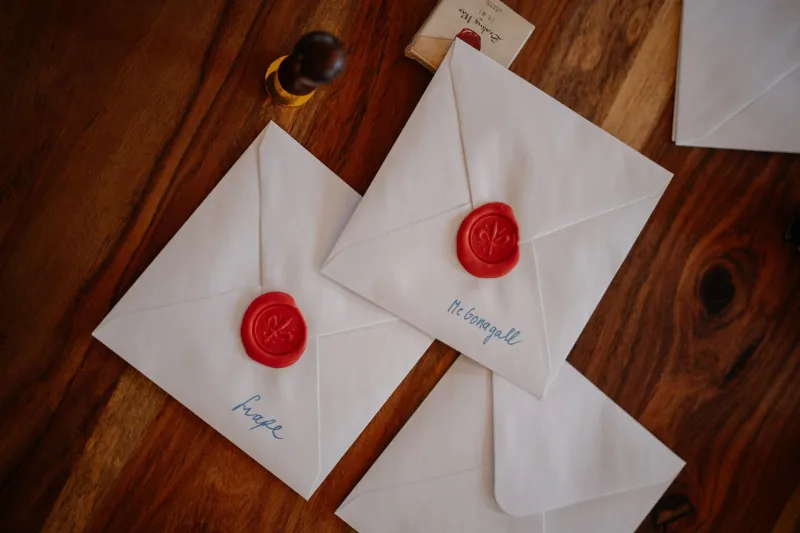
Picture this: it's 1978, and your Aunt Rosemary has just mailed you a birthday check from Phoenix. You cash it, buy something forgettable, and then — because this is simply what you do — you sit down at the kitchen table, pull out a piece of stationery, and write her a letter. Not a long one. Maybe four sentences. You thank her for the gift, tell her what you bought, mention that school is going fine. You fold it, lick the envelope, and drop it in the mailbox on the corner.
Five days later, Aunt Rosemary opens her mailbox in Phoenix and finds your note. She reads it twice. She probably puts it on the refrigerator.
The whole transaction — from gift received to gratitude acknowledged — took the better part of a week. And it mattered enormously to both parties.
The Ritual Inside the Ritual
Handwritten correspondence carried a specific kind of weight that's almost impossible to recreate digitally. Part of it was physical: the act of choosing the right stationery, finding a working pen, forming your letters carefully so the thing was actually legible. Part of it was temporal: you had to sit still long enough to compose something coherent, which meant you were, by definition, spending time on the person you were thanking.
But the most underappreciated element might have been the delay itself. When a thank-you note arrived in your mailbox, you knew it hadn't been dashed off in thirty seconds between two other tasks. You knew the sender had thought about it, written it, sealed it, stamped it, and mailed it — a sequence of deliberate steps that took real effort. The note was evidence of prioritization. The person had put you on their to-do list in a way that required actual follow-through.
There's a reason etiquette guides from the mid-twentieth century were so specific about thank-you note timing. Emily Post and her successors didn't just recommend sending them — they specified windows. Within two weeks of a wedding gift. Within a few days of a dinner party. The urgency wasn't about speed for its own sake. It was about demonstrating that the gesture had landed, that it had registered, that the recipient had been moved enough to act.
The Arrival of Instant Everything
Email arrived in American homes through the 1990s and changed the baseline expectation for response time almost immediately. Where a letter once took days, a message could now arrive in seconds. The postal system didn't disappear, but its role in personal communication shrank dramatically. By the time smartphones normalized text messaging in the early 2000s, the window between receiving something and being expected to acknowledge it had collapsed to nearly nothing.
The result is a strange paradox. We now have more tools for expressing gratitude than at any point in human history. You can send a text, an email, a voice memo, a GIF, a reaction emoji, or a TikTok video stitched to someone's original post. Gratitude has never been easier to transmit. And yet something in the transmission feels thinner than it used to.
Psychologists who study social exchange have a term for this: relational signaling. The idea is that the effort embedded in a gesture communicates something beyond the literal content of the gesture itself. When you hand-write a note, the effort is the signal. It says: I took time for you specifically. In a world of infinite instant options, effort has become the scarce resource — and effort is exactly what we've engineered out of the thank-you.
What a Text Message Can't Carry
None of this is to say that a heartfelt text is worthless. Of course it isn't. A genuine message sent in the right moment can land with real force. The medium isn't the whole story.
But consider the experience of receiving a handwritten note in the mail today, in 2025. It's so unusual that it immediately signals something. You slow down. You open it carefully. You read it more than once. The very rarity of the thing has restored the weight that used to come from the effort alone.
That's a telling reversal. The thank-you note became meaningful again not because anyone improved the format, but because it became rare. The friction that was once universal is now exceptional — and exceptional friction commands attention in a way that effortless convenience simply cannot.
Meanwhile, the standard thank-you text — sent at 11 p.m. while half-watching television, autocorrected and emoji-appended — gets a thumbs-up reaction and disappears into a thread of two hundred other messages. It was sent. It was received. Whether it was felt is another question.
The Slowness Was the Substance
There's a broader lesson buried in the evolution of the thank-you note, one that applies to how we communicate across the board. When everything is instant, nothing is weighted. When sending a message costs nothing in time or effort, receiving one signals almost nothing about the sender's investment.
Our grandparents weren't more grateful than we are. They weren't better people, or more socially skilled, or more emotionally attentive. They were just operating inside a system that built delay and effort into every act of communication — and that delay, almost accidentally, made gratitude feel like it cost something.
Cost is what gives a gift its meaning. The cost of time, of thought, of sitting down when you'd rather not and writing the four sentences that tell someone their gesture mattered.
Aunt Rosemary's refrigerator knew that. We seem to have forgotten.