The Doctor Who Had an Hour for You: What We Lost When Medicine Got Efficient
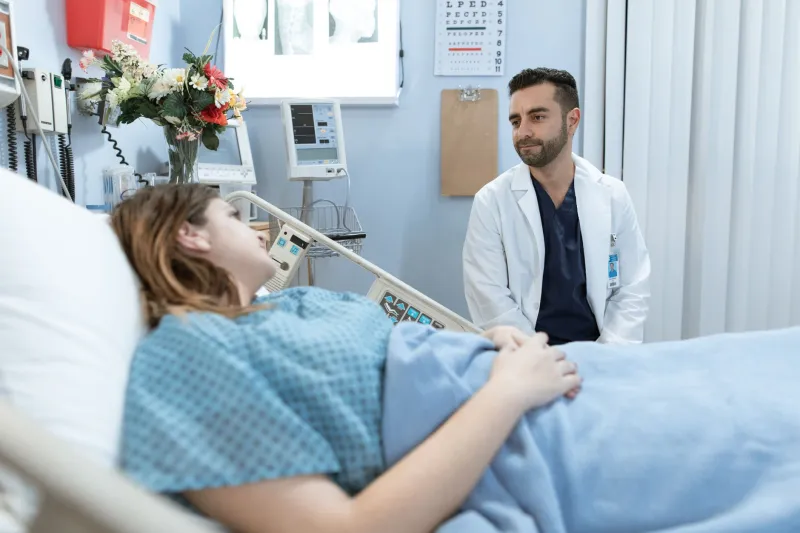
The appointment was at two o'clock, but nobody was particularly anxious about being seen at two o'clock exactly. The doctor's waiting room in a small American town in 1958 operated on something closer to a neighborhood rhythm than a strict schedule. You came in, you sat down, maybe you exchanged a few words with the person next to you, and eventually Dr. Whoever appeared in the doorway and called your name — not from a tablet, not through an intercom, but in person, because he knew your name and had for years.
What happened next was something that has become genuinely difficult to imagine in the context of modern medicine: he had time for you. Real time. Time to ask about your mother's hip, about whether the headaches were still happening, about how the new job was treating you. The appointment didn't have a hard stop at the fifteen-minute mark because the appointment wasn't designed around fifteen-minute slots.
That version of healthcare is largely gone. What replaced it is technically superior in almost every measurable way — and yet something real was lost in the efficiency trade, and we're only now beginning to understand what.
The Era of the General Practitioner
For much of the twentieth century, American healthcare was organized around the family doctor — a general practitioner who served as the primary point of contact for a patient's entire medical life. These physicians often had practices of a few hundred patients, people they came to know over years and sometimes decades. They delivered babies, managed chronic conditions, and made house calls when someone was too sick to travel.
The house call, in particular, deserves a moment of attention. The idea of a physician arriving at your home with a black bag, sitting at your bedside, and examining you in your own environment sounds almost fictional today. But as recently as the 1960s, house calls accounted for roughly 40 percent of all physician-patient encounters in the United States. Doctors went to patients. It was not considered extraordinary.
The logistics of that model required something that has since become a scarce resource in medicine: unhurried time. A physician who made house calls couldn't see twenty patients before noon. The pace was slower by necessity, and the relationship it created was correspondingly deeper.
What Efficiency Actually Optimized For
The shift toward high-volume, time-constrained medical practice didn't happen overnight, and it didn't happen because anyone decided that human connection in healthcare was overrated. It happened because of insurance reimbursement structures, the rise of specialist medicine, growing administrative requirements, and the sheer expansion of the patient population relative to available physicians.
By the 1980s and into the 1990s, primary care physicians were increasingly caught between the demands of a system that rewarded volume and their own instinct that good medicine required time. The math was unforgiving: to cover overhead, pay staff, manage malpractice insurance, and still earn a reasonable living, a doctor needed to see a certain number of patients per day. That number kept going up.
Today, the average primary care appointment in the United States runs between fifteen and seventeen minutes. Studies have found that physicians interrupt patients within eleven seconds of them beginning to describe their symptoms. Eleven seconds. The doctor who used to know which bus your father took to work has been replaced, not by a worse person, but by a system that doesn't have room for that kind of knowledge.
The Data on What's Missing
Here's where the story gets genuinely complicated, because modern medicine is also, by almost any objective measure, extraordinarily better than what existed in 1958. Conditions that were death sentences then are manageable chronic illnesses now. Surgical techniques that would have seemed miraculous are routine. Diagnostic tools that didn't exist have saved countless lives.
A patient with a serious cardiac event today has a dramatically better chance of surviving than their counterpart sixty years ago, and that's entirely because medicine got faster, more specialized, and more technically sophisticated. The efficiency that feels cold in a routine checkup is the same efficiency that keeps people alive in an emergency room.
But researchers studying patient outcomes have found something interesting in the margins: the quality of the physician-patient relationship turns out to matter clinically, not just emotionally. Patients who feel heard are more likely to follow treatment plans. They're more likely to report symptoms accurately. They're more likely to return for follow-up care. They're, in measurable ways, more likely to get better.
A 2019 study found that patients who rated their physician communication highly had significantly better management of chronic conditions like diabetes and hypertension than those who rated it poorly — independent of the specific treatments prescribed. The conversation, it turns out, is part of the medicine.
The Workarounds We've Built
It's telling that the gaps left by the efficient medical system have been filled by a proliferation of alternatives. Direct primary care practices, which operate outside insurance networks and charge flat monthly fees, have grown rapidly in the last decade partly because they promise something the standard system can't: longer appointments, same-day access, and a doctor who actually knows your history.
Telemedicine, accelerated dramatically by the COVID-19 pandemic, has restored some version of the house call — the physician appearing in your home, even if only on a screen. Online patient communities and health forums have, for better and worse, recreated some of the support and information-sharing that used to happen in a doctor's waiting room or across a physician's desk.
Concierge medicine — where patients pay a premium annual fee for enhanced access to their physician — has become a growth industry specifically because it sells what used to be standard: time.
The fact that we now pay extra to receive the level of unhurried attention that was once simply the baseline of a medical appointment says something important about what the optimization of healthcare actually cost us.
The Fifteen Minutes We're Working With
None of this is a straightforward argument for returning to the medicine of 1958. That medicine also failed people — catastrophically, in many cases. It was less scientifically informed, less technologically capable, and in many instances less accessible to patients who weren't white, weren't male, or weren't connected to the right physician. The nostalgia for old-fashioned doctoring has a way of glossing over those realities.
But the honest accounting of what changed has to include what was genuinely lost. The physician who knew your family, who had time to notice the thing you weren't saying, who understood that being sick is a human experience and not just a set of symptoms to be processed — that physician was providing something real.
The fifteen-minute appointment is a product of a system that got very good at certain things and, in doing so, got much worse at others. The question worth sitting with — maybe longer than fifteen minutes — is whether we can find a way to have both.