The Quiet Hours We Gave Away: How Late-Night Entertainment Stole America's Sleep
Somewhere around 1:15 in the morning, millions of Americans are still awake. Some are watching a streaming series they told themselves they'd stop after one more episode three episodes ago. Some are scrolling through short videos that blend into one another until the timestamps stop making sense. Some are just... there, phone in hand, not quite watching anything, not quite resting, suspended in that particular modern limbo that didn't have a name until recently.
We call it doomscrolling, or revenge bedtime procrastination, or just being tired but not sleepy. Whatever you call it, it's new. Genuinely, historically new. And understanding how we got here requires going back to a world where the night had a natural ending — not because people were more disciplined, but because the entertainment simply ran out.
When the Broadcast Day Had a Last Page
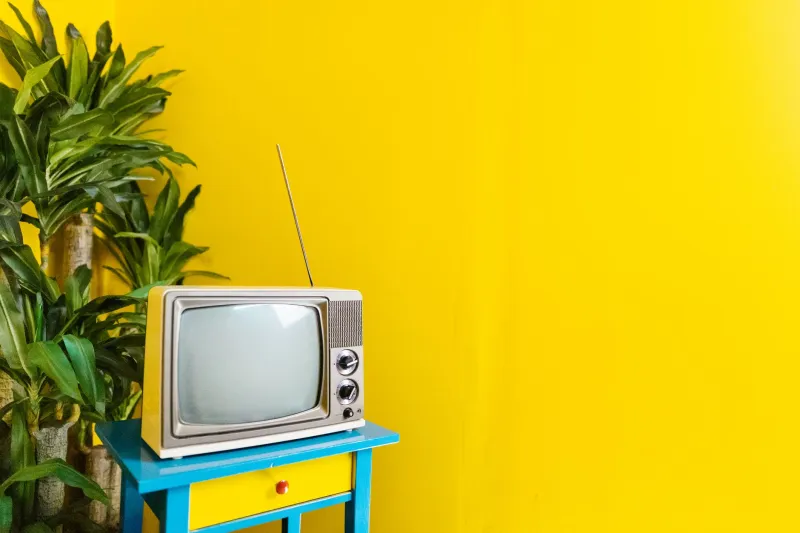
In the 1950s and into the 1960s, American television stations didn't broadcast around the clock. Most signed off somewhere between midnight and 1 AM, often with a rendition of the national anthem, a station identification card, and then nothing — just static, or a test pattern that hummed quietly until morning programming resumed.
This wasn't a moral statement. It was logistics. Broadcast infrastructure was expensive to run, audiences were small in the late hours, and advertisers weren't interested in buying time when most sensible people were in bed. The system, almost by accident, created a hard stop on the evening's entertainment.
For most American households, the television going dark was a signal. The day was over. The dishes were done, the kids were down, and there was nothing left to watch. Bed wasn't a decision you made — it was the only remaining option.
The average American in 1960 got somewhere between eight and nine hours of sleep per night. That number has been falling ever since.
Cable Broke the Dam
The first real crack in the structure came with the rise of cable television in the late 1970s and through the 1980s. HBO was broadcasting original movies at 11 PM. CNN launched in 1980 as the first 24-hour news network. MTV ran music videos at 3 AM. Suddenly, the night wasn't empty anymore — it was just a different kind of programming.
For night owls, shift workers, and insomniacs, this was a revelation. For everyone else, it introduced a new kind of temptation: the idea that something worth watching might be happening right now, at whatever hour you happened to be awake.
Late-night talk shows, which had existed since the days of Steve Allen and Jack Paar, multiplied. Infomercials filled the gaps. By the mid-1990s, the concept of there being nothing on television at any given hour had become almost quaint. There was always something on. The question shifted from "is anything playing?" to "what do I feel like watching?"
That shift in framing — from scarcity to choice — was more significant than it looked.
The Internet Made It Personal
Cable television created 24-hour availability, but it was still a shared, scheduled experience. You watched what was on. The internet, and particularly broadband internet in the early 2000s, changed the equation entirely by making entertainment both infinite and on-demand.
YouTube launched in 2005. Netflix began streaming in 2007. By the early 2010s, the idea of waiting for a show to air at a specific time was already starting to feel old-fashioned. You watched what you wanted, when you wanted, for as long as you wanted.
The autoplay function — introduced by Netflix and quickly copied by every platform that followed — deserves its own chapter in the history of lost sleep. It removed the small but meaningful friction of choosing to watch another episode. Instead of a decision, continuation became the default. The burden shifted: now you had to actively choose to stop.
Researchers studying sleep behavior began noticing the changes in the data. Average sleep duration in the United States had dropped to around 6.8 hours by the mid-2010s, down from those eight-plus hours of the early television era. The American Academy of Sleep Medicine was calling it a public health crisis.
The Phone That Followed You to Bed
If cable cracked the dam and streaming widened the breach, the smartphone was the flood.
For most of human history, the bedroom was, by practical necessity, a low-stimulation environment after dark. You might read by candlelight or lamplight, but the options for engaging your attention were limited. The bedroom was where the day ended.
The smartphone ended that arrangement completely. By 2015, surveys were finding that the majority of Americans kept their phones within arm's reach while they slept. Many checked them within minutes of waking — and within minutes of lying down. The bedroom had become just another room where the internet lived.
Social media added a layer that streaming alone couldn't provide: social anxiety. The fear of missing something — a conversation, a news event, a moment of cultural relevance — created a compulsive checking behavior that had no natural off switch. At least a television show eventually ends. A social media feed never does.
What the Enforced Rest Was Actually Doing
Here's the part of the story that tends to surprise people: the limited broadcast hours of the 1950s and 1960s weren't just a technical limitation. They were, functionally, a public health intervention that nobody designed on purpose.
Sleep researchers have spent the last two decades documenting what happens when humans consistently get less than seven hours of sleep. The list is not subtle: increased risk of cardiovascular disease, impaired immune function, reduced cognitive performance, higher rates of depression and anxiety, and a measurable decrease in emotional regulation. Chronically under-slept people are, in almost every measurable way, less healthy and less happy.
The postwar American who went to bed at 10:30 because the TV signed off wasn't making a wise lifestyle choice. He was just following the available options. But the outcome — a full night's sleep, a rested brain, a body that recovered — was genuinely good for him in ways that no one was tracking at the time.
The Night We Can't Get Back
None of this is an argument for going back to three-channel television and test patterns at midnight. The entertainment available today is, by almost any measure, richer, more diverse, and more interesting than anything that existed in 1960. The ability to watch what you want, when you want, is a genuine improvement in quality of life.
But the cost is real, and we don't talk about it honestly enough. The late-night hours that once belonged to rest have been colonized by content. The quiet that used to signal the end of the day has been replaced by a scroll that never ends.
Somewhere in that gap between the last broadcast and the first morning program, Americans used to do something that turned out to be irreplaceable.
They slept.