The Thrill of the Find: What Shopping Felt Like Before the Internet Already Knew What You Wanted
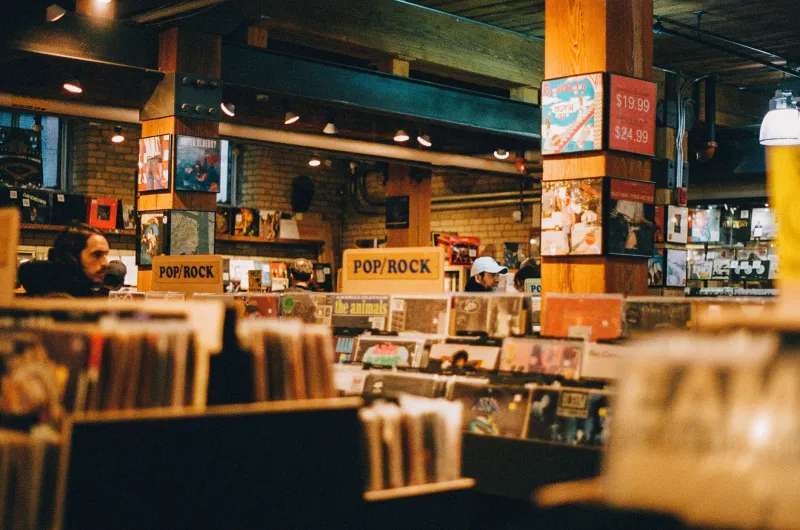
There's a moment that used to happen in stores — in record shops, in bookstores, in the kind of department stores that don't really exist anymore — where you'd reach for something you hadn't planned on, flip it over, read the back, and think: where has this been all my life?
That moment still technically exists. But it's getting harder to stumble into. Because the algorithm got there first.
Browsing Used to Mean Something
Not so long ago, shopping was a genuinely exploratory activity. You went in without a list, or with a loose one, and the store itself did the work of introducing you to things. Window displays were curated to catch your eye. End caps were stocked with items the buyer thought deserved attention. A good record store clerk might hand you something you'd never heard of and say, "Trust me."
This wasn't inefficiency. It was discovery. And it worked because the people doing the curating — store owners, buyers, floor staff — had actual opinions. They'd made bets on what customers would respond to, and sometimes they were right in ways that felt almost magical.
Think about the experience of walking into a well-run independent bookstore in, say, 1994. There were staff picks with handwritten notes. There were tables organized around themes that someone had actually thought about. You might go in looking for one novel and leave with three, one of which would become your favorite book of the decade — and you never would have found it if the person shelving returns hadn't put it face-out on a whim.
Or consider the department store as a cultural mirror. The layout of a store like Marshall Field's or Nordstrom in its prime wasn't random. It reflected what buyers believed American consumers cared about, what was new, what was worth showing off. Walking through those floors was a kind of education in contemporary taste.
When the Algorithm Took Over the Floor Plan
The shift toward data-driven retail didn't begin with Amazon, but Amazon perfected it. The recommendation engine — "Customers who bought this also bought..." — was a revelation when it launched and is now so ubiquitous it's invisible. Every platform you use to shop is doing some version of the same thing: analyzing your past behavior to predict your future desires and serving you a curated feed of things you're statistically likely to purchase.
On paper, this sounds like an improvement. You spend less time searching. You find what you want faster. The friction goes down.
But something else goes down with it: surprise.
The algorithm is, by design, backward-looking. It knows what you've bought, what you've clicked, how long you hovered over something before moving on. It is very good at showing you more of what you already like. What it cannot do — what it is structurally incapable of doing — is show you something genuinely new to you, something outside your established pattern, something that arrives like a small shock of recognition.
The serendipitous find has been optimized away.
The Disappearing Middle Ground
This matters more than it might seem, because the stores that enabled genuine discovery have largely disappeared. The independent record shop. The neighborhood bookstore. The quirky gift shop run by someone with actual taste. These were the places where browsing felt like an adventure, and most of them couldn't survive the combination of online competition and rising rents.
What replaced them? Big-box stores with standardized national inventories, and online platforms that reflect your own preferences back at you like a mirror. Both models are efficient. Neither is particularly interesting.
Even the physical retail that survived has adapted to algorithmic logic. Stores now use foot traffic data and purchase analytics to decide what goes where. The "spontaneous" placement of that item near the checkout isn't spontaneous at all — it's the result of conversion rate testing. The end cap that used to reflect a buyer's genuine enthusiasm now reflects a vendor's co-op advertising budget.
What You Don't Know You're Missing
Here's the quiet problem with a world where the algorithm knows you better than you know yourself: you stop expecting to be surprised. You start shopping for confirmation rather than discovery. You search for the thing you already have in mind, filter by rating, read three reviews, and buy the obvious choice.
And it works fine. The thing arrives. It's what you expected.
But there's a version of you that never finds the record that changes how you think about music, or the book that arrives at exactly the right moment, or the jacket you'd never have tried on if someone hadn't pulled it off the rack and handed it to you. That version of you is increasingly common.
The joy of genuine discovery — the kind that catches you off guard, the kind the algorithm can't engineer — was never really about shopping at all. It was about being open to the unexpected. About walking into a space and letting it show you something you didn't know you needed.
We traded that for free two-day shipping. The math made sense at the time.