Three O'Clock at the Corner of Fifth and Main: When an Appointment Was a Promise You Didn't Break
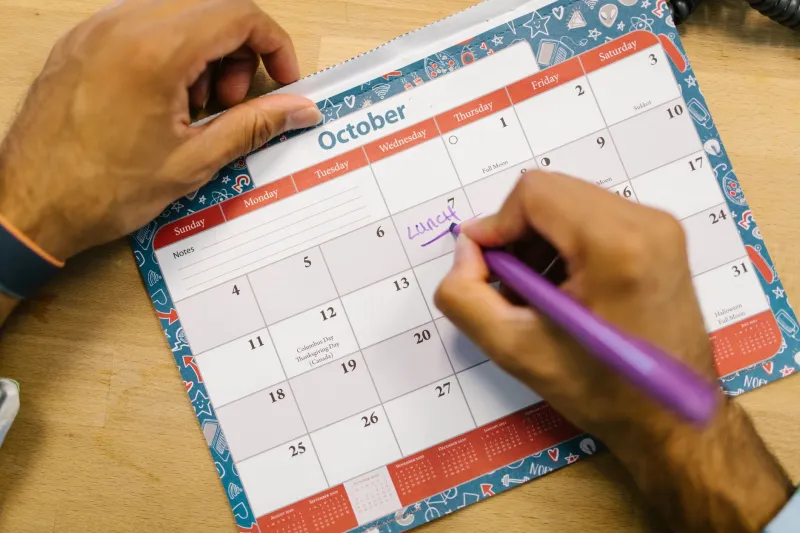
Imagine agreeing to meet someone at a specific corner at three in the afternoon — no cell phone, no way to send a message if you're running late, no ability to confirm that morning whether they're still coming. You simply agreed, and then you both showed up. Not because you were especially virtuous. Because there was no alternative.
That was the basic structure of American social and professional life for most of the twentieth century. An appointment wasn't a placeholder. It was a commitment, and it carried weight precisely because breaking it meant something concrete: the other person would stand there waiting, or they'd miss their opportunity entirely, and there was nothing either of you could do about it.
The Architecture of a Scheduled Life
Before mobile phones, before email, before the digital calendar that syncs across all your devices and sends you a reminder fifteen minutes in advance, planning required a different kind of discipline. You thought carefully before you committed to something, because committing to something meant blocking out real time in your real life — time you couldn't easily recover if the appointment fell through.
A typical American family in, say, 1965 might have had a handful of firm commitments in any given week. A doctor's appointment, a parent-teacher conference, a dinner with relatives, a meeting with the bank. Each of these required coordination that happened days in advance, by phone or in person, and once the time was set, it stayed set. Rescheduling was possible but cumbersome — you had to reach the other party, which might require multiple attempts, and the social cost of canceling without a genuinely good reason was real.
Business culture was even more structured. Sales calls, client meetings, and vendor appointments were scheduled with precision and treated with formality. Being late to a meeting in 1955 wasn't just inconvenient — it was a character statement. It suggested that your time was more valuable than the other person's, and in a professional culture built heavily on reputation and personal relationships, that was a costly signal to send.
The Answering Machine Cracks the Door
The first significant disruption to appointment culture was surprisingly low-tech. The home answering machine, which became widely affordable in the late 1970s and spread rapidly through the 1980s, introduced a new possibility: you could leave a message without reaching the person directly. For the first time, it was possible to cancel or reschedule without having an actual conversation about it.
This seems minor in retrospect. But it was the beginning of something. The friction of cancellation — the awkwardness of explaining yourself in real time, the social pressure of the live phone call — began to ease. You could leave a message at seven in the morning, before the other person was even awake, and the deed was done.
The cell phone, which moved from executive accessory to mass-market necessity over the course of the 1990s, changed the equation more dramatically. Now you could reach someone anywhere, at any time. And crucially, they could reach you. The need to plan ahead — to commit to a specific time and place because that was the only way to coordinate — began to erode. Why lock in three o'clock on Tuesday when you could text on Tuesday morning and figure it out then?
Flexibility as a Value System
By the 2000s, a new cultural norm was solidifying. Flexibility — the ability to adapt, to keep options open, to avoid locking yourself in — had become not just a practical preference but a genuine social value. Being rigid about schedules started to seem uptight. The person who insisted on confirming plans three days in advance and showed up exactly on time was starting to look, in certain circles, slightly anxious.
The smartphone cemented this shift in ways that are still playing out. When everyone carries a device that can locate them, message them, and reroute them in real time, the case for advance planning becomes genuinely harder to make. Why do you need to commit to a restaurant at noon if you can decide at seven-thirty when you're already getting dressed? Why confirm a meeting the day before when you'll both see the calendar notification that morning?
Apps built around scheduling — from Google Calendar to Calendly to the endless parade of reservation platforms — have made the logistics of coordination easier than ever. But they've also made rescheduling frictionless. A few taps and you've moved the meeting. Another tap and you've canceled entirely. The other person gets a notification. Nobody has to have a conversation.
The Hidden Cost of the Open Schedule
Research on decision-making and commitment suggests something counterintuitive: the easier it is to cancel, the more anxious people become about their commitments. When cancellation is nearly costless, every appointment becomes a question you're constantly re-evaluating. Should I still go? Is this the best use of my time? What if something better comes up?
This is sometimes called "option anxiety" — the psychological burden of keeping too many possibilities open. Paradoxically, the freedom to reschedule at any moment can make people feel less free, not more, because the decision never quite closes. The old system, with its high cancellation costs and limited communication options, forced closure. You committed, and then you stopped thinking about it. The appointment was in the book. You'd show up.
There's also the question of what constant rescheduling does to relationships — professional and personal alike. Trust, in both business and friendship, is partly built through demonstrated reliability. When you say you'll be somewhere at three and you're there at three, you're communicating something beyond logistics. You're saying that your word has weight. That you took the commitment seriously enough to organize your day around it.
In a culture where last-minute cancellations via text have become routine, that signal is harder to send — and harder to read. Reliability and flexibility have become difficult to distinguish from the outside.
What the Old System Knew
It would be naive to argue that the old appointment culture was simply better. It was exclusionary in ways that are easy to overlook. Rigid scheduling favored people with stable jobs, reliable transportation, and the kind of predictable lives that allowed for advance planning. For hourly workers, parents of young children, or anyone managing chronic illness or caregiving responsibilities, the inflexibility of the old system was a genuine hardship.
But there's something worth preserving in the underlying attitude — the idea that agreeing to be somewhere at a specific time is a form of respect. That your presence is a gift you're choosing to give, and that canceling it lightly diminishes something.
The corner of Fifth and Main at three o'clock was a real place, and someone was going to be standing there. The knowledge that you had to show up — that there was no other option — had a clarifying effect. It made the appointment matter. It made the person waiting matter.
We have more options now. We're not always sure that's made us better at showing up.