Twenty-Four Exposures and a Prayer: When Taking a Photo Was a Decision You Actually Had to Make
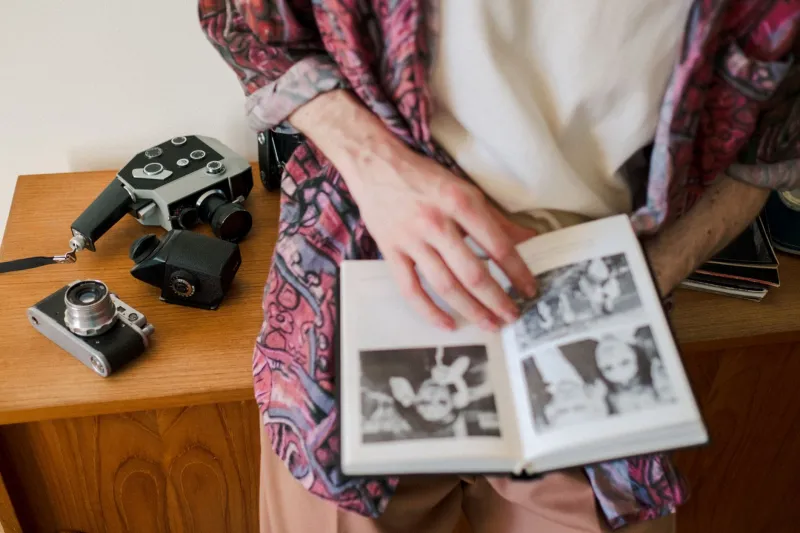
Pull out your phone right now and check how many photos you have saved on it. If you're like most Americans, the number is somewhere north of three thousand. Maybe ten thousand. Maybe you honestly don't know, because you stopped counting somewhere around the time your storage hit ninety percent and you started getting those little warning notifications you keep dismissing.
Now try to remember the last photo you took that you genuinely thought about before pressing the button.
That hesitation — that small, deliberate pause — used to be the whole point.
The Economics of the Shutter
For most of the twentieth century, photography was a transaction. You bought a roll of film — 12, 24, or if you were feeling ambitious, 36 exposures — loaded it into your camera, and understood with complete clarity that each click cost you something. Not just money, though that was real enough. A roll of Kodak film, processing included, could run you the equivalent of thirty or forty dollars in today's terms. What you were really spending was attention.
You had to think. Is this moment worth one of my twenty-four? Is the light good enough? Is everyone looking the right direction? Should I wait one more second to see if the kid stops squinting?
That mental checklist wasn't a burden. It was the process by which ordinary people became, without ever calling themselves one, photographers.
And then you waited. You finished the roll — sometimes over the course of weeks or even months — drove it to the drugstore, handed it over the counter, and came back days later to see what you'd actually captured. That gap between taking a picture and seeing it created something remarkable: genuine surprise. You had forgotten half the shots. Some came out beautifully. Some were disasters. And every single print felt like it had earned its place in the envelope.
The Shoebox Was a Curation System
Ask anyone who grew up before digital cameras what their family photos look like, and they'll probably describe a shoebox. Maybe a photo album with those sticky magnetic pages. A drawer in the hall table. A carousel of slides that only came out at Thanksgiving.
Those collections were small by necessity, and that scarcity made them precious. Fifty photos from a family vacation to Yellowstone in 1978 told a complete story because someone had decided — consciously, deliberately — which fifty moments from that trip were worth preserving. The rest existed only in memory, which is to say they existed in the best possible archive.
There's something almost editorial about it when you look back. Every family was curating its own history, making choices about what mattered and what could be let go. The blurry shot got left out. The redundant angle didn't make the cut. What survived was the strongest version of the story.
Today, most people's phones contain seventeen nearly identical pictures of the same sunset, none of which they've looked at since the night they were taken.
When the Camera Came Out, It Was an Event
There's another dimension to this that gets overlooked: cameras used to mark occasions. You didn't bring one to an ordinary Tuesday. You brought it to a birthday, a graduation, a family reunion, the first day of school. The appearance of a camera in 1965 signaled to everyone present that this moment had been deemed significant enough to document.
That signal meant something. People straightened up. They gathered together. They smiled — not the rehearsed, Instagram-ready expression we've all learned to perform, but something closer to genuine acknowledgment. We are here. This matters. Someone thought it was worth remembering.
The smartphone changed all of that, and not entirely for the better. When the camera is always present — always accessible, always free to use — nothing gets that same ceremonial weight. We photograph everything, which is another way of saying we've decided that everything is equally important. And when everything is equally important, nothing really is.
The Paradox of Infinite Memory
Here's the strange irony at the center of all this: we are the most photographed generation in human history, and most of us remember our own lives less clearly than our grandparents remembered theirs.
Researchers have actually studied this. The act of photographing something, it turns out, can reduce how well you remember experiencing it. When you outsource the memory to a device, your brain partially checks out of the moment itself. You were there, technically. You have the photo to prove it. But you weren't quite there in the way your grandfather was at his wedding, because nobody had a camera pointed at his face the entire time.
There's also the retrieval problem. Your grandmother's fifty vacation photos lived in a shoebox she could pull out anytime. Your ten thousand vacation photos live somewhere in a cloud folder you haven't opened in two years, organized by no system anyone would call intuitive, mixed in with screenshots of grocery lists and seventeen photos of a parking spot you took so you wouldn't forget where you'd left the car.
What We Traded Away
None of this is an argument for going back. Digital photography democratized an art form that used to require real money and real skill. It let families in every economic circumstance document their lives without financial anxiety. It gave us the ability to capture moments that would have been lost forever under the old constraints. Those are genuine gains.
But there's something worth acknowledging in what we quietly gave up. We traded intentionality for volume. We traded the curated album for the bottomless scroll. We traded the event of photography for the reflex of it.
The people who took twenty-four photos at a birthday party and chose their favorites weren't doing less than we do now. In a meaningful sense, they were doing more. They were paying attention. They were deciding. They were, without making a big deal of it, practicing the ancient human skill of figuring out what actually matters.
That skill, it turns out, doesn't just apply to photography. But photography used to be one of the places we practiced it most naturally.
Something to think about next time you take your fourteenth shot of the same dish before your food gets cold.