The $2 Call to Grandma: How Long-Distance Charges Ran American Family Life
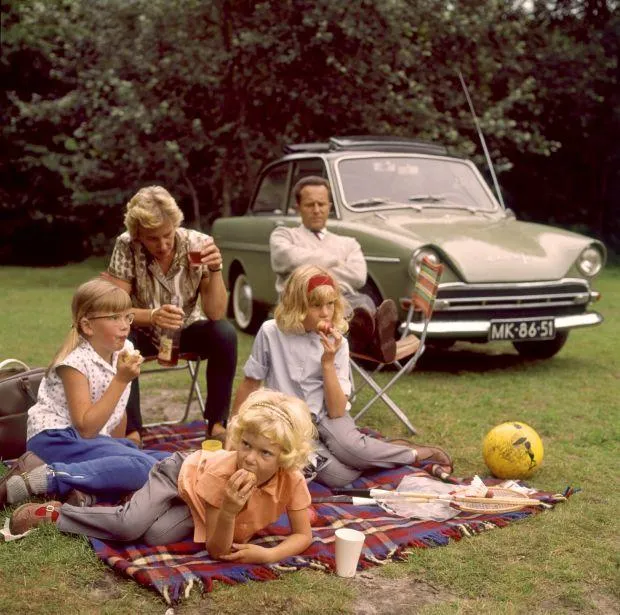
Photo: Nationaal Archief, No restrictions, via Wikimedia Commons
There was a time when an American family could tell you, to the penny, what it cost to talk to their relatives. Not roughly. Exactly. Because until the 1980s, a long-distance phone call was a metered, expensive, genuinely financial decision—and it changed how the country stayed connected in ways we've completely forgotten.
A Call Was a Purchase
Under the old AT&T monopoly, long-distance rates were steep and tiered by both distance and time of day. A call from Chicago to a sister in Atlanta might run 50 cents a minute or more in the 1960s and 70s—real money when the median household income was under $10,000. Calling on a weekday afternoon cost noticeably more than calling on a Sunday evening, which is why Sunday evenings were, across America, the official hour of phoning home.
Families developed strategies that would look absurd today. People placed "station-to-station" calls instead of asking for a specific person to save money. Some made the legendary "collect call with a name that was actually a message" gambit—asking the operator to connect a collect call "from Mr. WeAreFineSeeYouSoon," declining the charges, and having the message delivered anyway. Grandparents kept egg timers next to the phone. Kids were told, in all seriousness, "It's long distance, hurry up."
A chatty 20-minute call could cost $10 or more—the equivalent of $80 to $100 today. Families budgeted for phone calls the way modern households budget for streaming services. Some wrote them into the monthly ledger.
One Phone, One Bill, Everyone Accountable
The financial structure of the household phone shaped family behavior in ways that went beyond cost. There was one line, one monthly bill, and every call on it was itemized. Parents could see who called whom. Teenagers' social lives were, to some degree, on the family invoice.
This created an unspoken economy inside the house. Calling your friend across town was free (local calls were typically unmetered), which quietly concentrated social life within a small radius. Calling across the country was an event. Kids growing up in that era often knew their cousins three states away primarily through letters and annual visits—not because anyone chose that, but because the phone company's rate card chose it for them.
The Cost of Distance, Literally
Consider what this meant for American families in practical terms. A child who moved to California from Ohio in 1970 might speak to her parents once a month, briefly. A soldier stationed overseas? International calls were so expensive that families often relied on letters, or the brief, scheduled "MARS station" ham-radio calls that military families remember fondly and tearfully.
Compare that to today, when a video call to a relative in Manila or Mexico City costs nothing beyond the internet bill, and the average American sends more voice messages in a day than a 1970s family made long-distance calls in a year. The communication itself didn't just get better—it got effectively free, which is a price collapse of essentially 100%.
Deregulation in the 1980s started the slide. Competition from MCI and Sprint drove rates down. Calling cards, then 10-10 dial-around numbers, then cell phones with bundled minutes, then unlimited plans, then internet calling. Each step made the meter tick slower, until it stopped ticking at all.
What the Rate Card Used to Decide
Here's the uncomfortable question the old system raises: how many of our relationships were shaped by pricing? If your family talked to one set of relatives monthly and another set twice a year, that wasn't only about closeness. It was about who lived inside the cheap-calling zone.
Today, geography has lost almost all financial meaning in our relationships. We video-chat across time zones casually, endlessly, and for free. It's an unambiguous gain—probably the greatest collapse in the cost of human connection in history.
But there's a small counterpoint worth remembering. When a call cost a dollar a minute, people prepared for it. They thought about what they wanted to say. A call to Grandma was scheduled, anticipated, and savored—because it was paid for.
Now that connection costs nothing, we perhaps value the conversation differently. The meter is gone. Whether that made us richer or just noisier is the kind of question a monthly phone bill, itemized in pencil, used to answer for us.