He Knew Your Name and Your Blood Pressure: The Neighborhood Pharmacist Who Actually Had Time for You
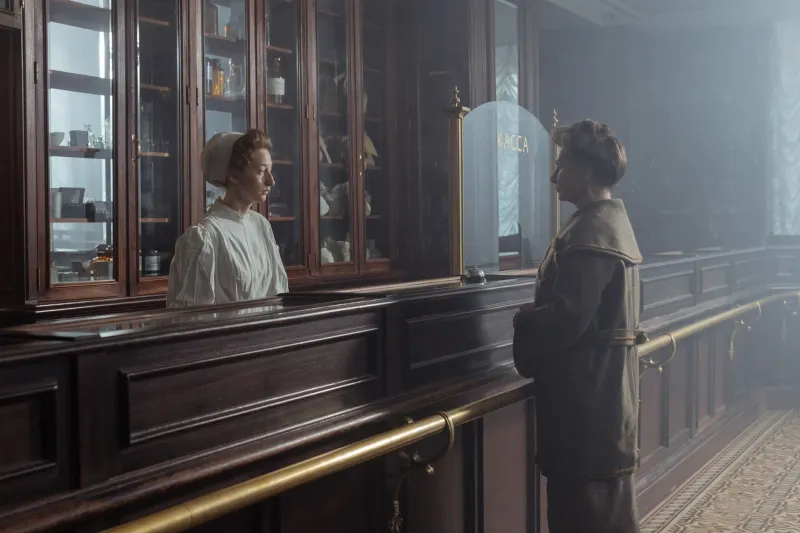
Walk into most chain pharmacies today and you'll notice a few things right away. The plexiglass barrier. The queue marker on the floor telling you where to stand. The small, laminated sign explaining that your consultation may be conducted at the window to your left. If you're lucky, you'll get thirty seconds with someone who's already scanning the next prescription before you've finished your sentence.
It wasn't always like this. Not even close.
The Corner Drugstore Was a Different Kind of Institution
For much of the twentieth century, the neighborhood pharmacy was less a retail outlet and more a community fixture — something between a doctor's annex and a trusted friend's kitchen table. The pharmacist behind the counter often owned the place. He'd been there for years. He knew which of your kids had ear infections every winter, which medications your father couldn't mix, and whether the generic version of something was worth the swap.
These weren't just pleasant extras. They were the point.
Before the era of instant internet searches and WebMD rabbit holes, the pharmacist was genuinely one of the most accessible healthcare professionals in any American neighborhood. No appointment needed. No co-pay for the conversation. You walked in, asked a question, and got a real answer from someone who had spent years studying exactly this.
Drug interactions, dosage questions, side effect concerns — these were handled face to face, with eye contact and follow-up questions. The pharmacist might pull out a reference book, or he might just know the answer off the top of his head because he'd been asked the same thing forty times that year.
When Efficiency Arrived, Expertise Got Rearranged
The shift didn't happen all at once. Through the 1980s and into the 1990s, independent pharmacies began losing ground to large chain operations. Eckerd, Rite Aid, Walgreens, CVS — these companies could undercut on price and out-volume any single-location shop. The economics were hard to argue with.
But the business model that made chains profitable also changed what a pharmacist's day actually looked like. Instead of consulting, they were processing. The volume of prescriptions a modern chain pharmacist is expected to fill in a single shift is staggering — in some locations, hundreds per day. There is simply no world in which that pace allows for the kind of extended, thoughtful conversation that used to define the role.
The physical layout of pharmacies changed too. Counters got higher. Barriers went up — first for security, then for pandemic protocols that never quite came back down. The drive-through window, introduced as a convenience, quietly became the dominant mode of interaction for millions of Americans who now collect their medications the same way they collect french fries.
And when you pick up a prescription today, what you receive in place of a conversation is a printout. Sometimes several pages long. Dense, legalistic, formatted in a font size apparently designed to discourage reading. The information is technically there. The relationship is not.
What the Paper Bag Can't Replace
There's a practical cost to this transformation that doesn't get discussed enough. Medication errors, dangerous drug combinations, and improper dosing are genuine public health concerns — and a knowledgeable pharmacist who knows your history is one of the most effective safeguards against all of them.
Studies have consistently shown that patients who receive face-to-face counseling from pharmacists are more likely to take medications correctly, more likely to flag problems early, and more likely to understand what they're actually putting in their bodies. The printed warning sheet stapled to the bag is not a substitute for a human being asking, "Are you taking anything else right now?"
Beyond the clinical argument, there's something harder to quantify that also went missing. The corner pharmacy was a place where people checked in on each other. Where an elderly customer who hadn't been in for a few weeks might prompt a phone call. Where the person behind the counter noticed things — the slight tremor, the new medication that didn't quite make sense given what they already knew about you.
That kind of attention doesn't appear on any efficiency metric. Which is probably why it was the first thing to go.
The Return of Something Like the Old Model
To be fair, the story isn't entirely bleak. Some independent pharmacies have survived and even thrived by leaning into exactly what the chains abandoned — personal service, compounding, genuine consultation. Specialty pharmacies that focus on complex medication regimens have built their entire value proposition around the kind of relationship that used to be standard everywhere.
And there are pharmacists working inside chain stores who manage, despite everything, to carve out moments of real human connection. They remember faces. They ask the follow-up question. They step out from behind the barrier when the situation calls for it.
But they're working against a system that wasn't designed with that in mind.
The neighborhood pharmacist who knew your name and your blood pressure and your mother's heart condition wasn't a luxury. He was a resource — one that most American communities quietly handed over in exchange for longer hours and lower co-pays. Whether that trade was worth it probably depends on when you last needed someone to actually explain what was in the bag.