The Stranger Who Knew Which Bus to Take: What We Gave Up When We Put Our Headphones In
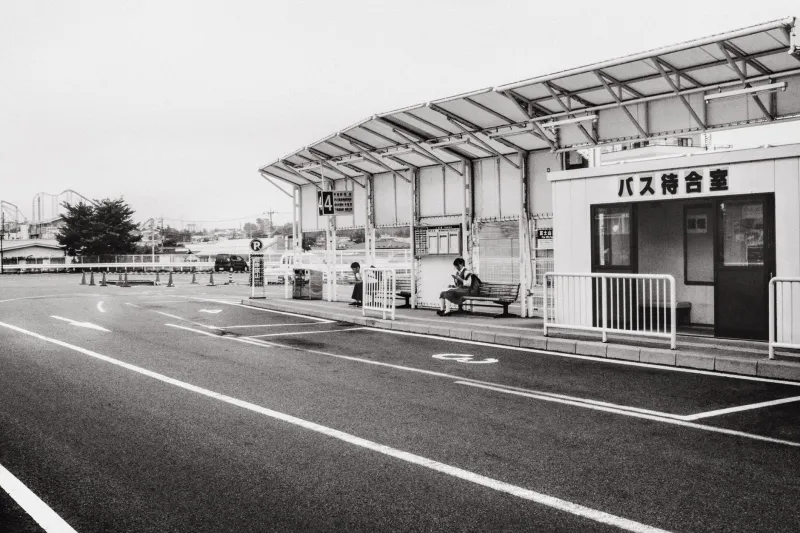
It used to happen constantly, in the most ordinary places. You're waiting for your clothes to dry at the laundromat on a Tuesday afternoon. The woman next to you mentions she's been coming here for twelve years. You ask if the big machines are worth the extra quarters. She tells you only for comforters, and also that the dry cleaner two blocks over does military discount if you ever need it. You thank her. She nods. You both go back to your separate lives, slightly better informed and slightly less alone.
That exchange almost certainly didn't change your life. But new research suggests it was doing something important that you probably weren't aware of.
Public Space Used to Mean Shared Space
For most of the twentieth century, Americans spent significant portions of their daily lives in communal public settings where interaction with strangers was not just possible but expected. Train stations, barbershops, bus depots, diner counters, laundromats, waiting rooms, hardware stores — these were places where you physically couldn't avoid other people, and where the social norms actively encouraged light conversation.
The barbershop is the clearest example. Before chain salons and appointment-only hair studios, the neighborhood barbershop was where men waited, sometimes for an hour, in a room full of other men they mostly didn't know. The wait was the point. You read the newspaper, you listened to whoever was in the chair hold court on last night's game, you offered your own opinion when the topic warranted it. The barber himself was a kind of informal social hub — he knew everyone's name, remembered your kids' ages, and had an opinion on everything from local politics to the best place to get a transmission rebuilt.
Train and bus travel created similar conditions. Long waits in stations, shared seating, hours of travel without personal entertainment devices — these were environments that practically required you to talk to the person next to you. Not deeply, not always meaningfully, but genuinely. You learned things. You heard perspectives from people outside your usual circle. You occasionally got advice that turned out to matter.
Sociologists Have a Name for What That Was
Mark Granovetter, a sociologist at Stanford, published a paper in 1973 that has become one of the most cited in his field. His argument was about what he called the strength of weak ties — the idea that the loose, casual connections we maintain with acquaintances and strangers are often more valuable than our close relationships when it comes to accessing new information, opportunities, and perspectives.
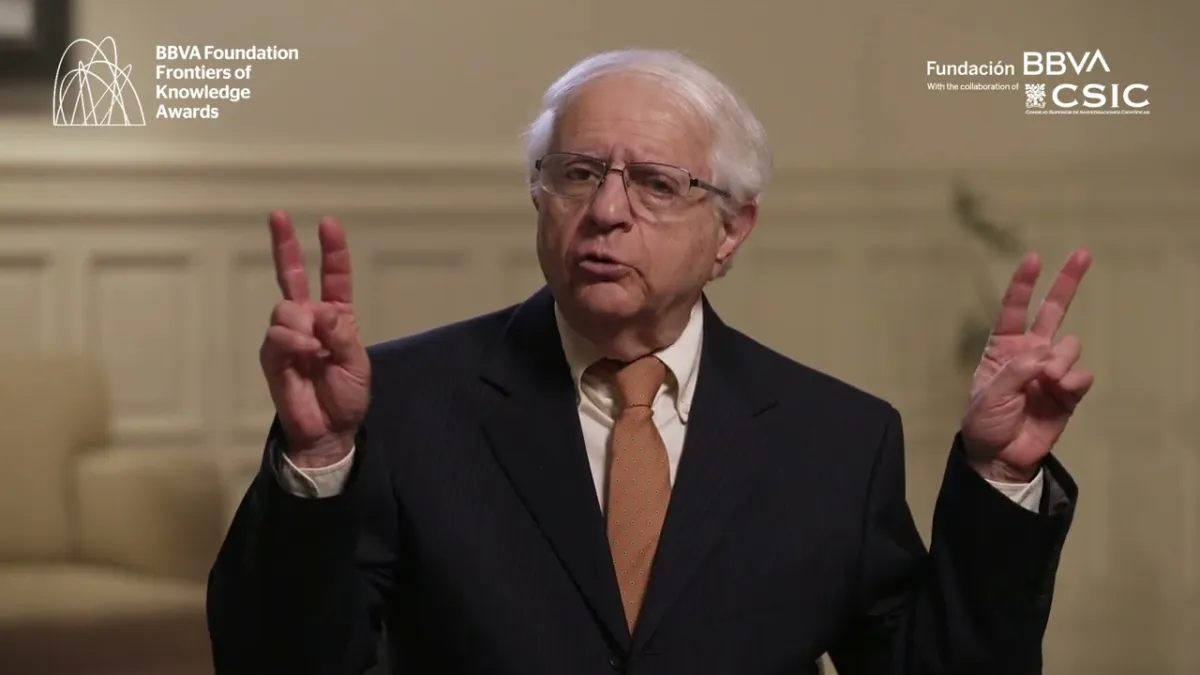 Photo: Mark Granovetter, via i.ytimg.com
Your close friends, Granovetter pointed out, mostly know the same things you know. They travel in the same circles, hear the same news, share the same assumptions. But the stranger at the bus stop? The woman at the laundromat? The guy waiting for his car at the mechanic? They come from different networks entirely. The information they carry — the job opening they heard about, the neighborhood they know, the doctor they trust — is genuinely new to you in a way that your best friend's recommendations often aren't.
For decades, Americans were building and maintaining these weak ties constantly, without thinking about it, simply by occupying shared public spaces and following the unwritten social rules that made casual conversation normal.
Then Came the Screen, and Then the Earbud
The shift didn't happen all at once. It's tempting to blame smartphones, but the retreat from public conversation started earlier — with the Walkman in the 1980s, with the paperback book held up as a social shield, with the gradual cultural drift toward privacy and self-containment in shared spaces.
But the smartphone accelerated everything dramatically. When a device appeared that could fill every idle moment with personalized content — music, podcasts, social feeds, messages from people you already know — the social cost of ignoring the stranger next to you essentially dropped to zero. Nobody expects you to talk to them anymore. The headphones signal it clearly: I am elsewhere. Please don't interrupt.
The result is a strange new condition. Americans are physically surrounded by other people in public spaces more than ever — in coffee shops, on transit, in waiting rooms — and yet genuinely alone in a way that would have seemed bizarre to someone from 1955. The room is full. Nobody's talking.
What the Research Is Starting to Show
A series of studies over the past decade has begun to quantify what this costs us. Researchers at the University of Chicago found that commuters who were instructed to talk to strangers on trains reported higher levels of positive emotion at the end of their commute than those told to behave as they normally would — which, for most, meant silence and a phone screen.
 Photo: University of Chicago, via chistockimages.com
The catch is that most participants predicted the opposite result before the experiment. They assumed talking to a stranger would be awkward and draining. It wasn't. It turned out to be quietly energizing in a way that scrolling through a social media feed was not.
Other research has connected the decline of casual public interaction to increases in reported loneliness, even among people with robust close-friend networks. The weak ties weren't just information pipelines. They were reminders, delivered dozens of times a day in small doses, that you existed in a community of other people who were basically fine and mostly friendly.
The Waiting Room Used to Be the Neighborhood
There's a version of American public life that was genuinely more connected — not in the digital sense, but in the literal, physical, human sense. It happened in places that weren't designed for connection but facilitated it anyway: the barbershop, the bus station, the laundromat, the diner counter at 7 AM.
Those spaces still exist. The laundromat hasn't gone anywhere. The waiting room at the DMV is still full of people with nothing to do for forty-five minutes. The bus still runs.
What changed is what we do when we're in them. We used to look up. We used to make eye contact. We used to say something about the weather or the wait time and see where it went.
It didn't always go anywhere. But sometimes it did. And even when it didn't, something was happening — a small, invisible thread of human connection being maintained between people who would never become friends but who were, briefly, genuinely present to each other.
Pull out one earbud. See if anyone's there.